MiamiValleyDreamHomes.com Blog - Your Ultimate Source for Real Estate News, Insights, and Tips in the Greater Dayton Area of Ohio

Welcome to our real estate blog on MiamiValleyDreamHomes.com, your ultimate source for real estate news, insights, and tips in southwest Ohio! Whether you're a first-time homebuyer or a seasoned investor, our blog is designed to provide you with the latest news and trends in the Miami Valley real estate market, as well as insider tips and advice to help you navigate the buying or selling process with confidence.

With our team of expert Realtors, including top Dayton realtors and the best Beavercreek listing agent with great online reviews, you can rest assured that you're in good hands. We're committed to providing you with a stress-free and seamless real estate experience, whether you're buying, selling, or just looking for valuable insights about the local market.

So what are you waiting for? Start exploring our blog today and discover why MiamiValleyDreamHomes.com is the top choice for real estate buyers and sellers in the Miami Valley area!


March 22, 2026

Selling Home Website: How to Choose the Right Platform for Your Sale

If you're comparing a Selling Home Website, you're likely trying to balance exposure, cost, and control. Some platforms give you broad visibility, while others focus on saving fees or speeding up the process.

Don & Cyndi Shurts work with sellers across the Dayton area, where online visibility plays a key role in attracting buyers. Listings that are positioned well online tend to generate more interest and stronger offers.

In this article, you’ll see how different selling websites work, what each option offers, and how to match them to your goals. You’ll also learn how MLS exposure, marketing, and negotiation fit into the bigger picture. That way, you can choose a path that fits your timeline and priorities.

Getting Started: Choosing How You’ll Sell Online

Think about how much help you want, how much time you have, and what you hope to keep from your sale. Each path changes your exposure, control, and costs in its own way.

Listing with a Real Estate Agent

A local real estate agent lists your home on the MLS and handles marketing, showings, and negotiations. Agents set a competitive price using recent Dayton comps, arrange professional photos, and promote your listing to buyer agents in the Miami Valley.

When you use an agent, you pay a commission split between listing and buyer agents, but you get hands-on support through contracts and inspections. Agents also give advice on repairs and staging, which usually helps attract better offers in the Dayton market.

If you want fewer calls and a more organized process, let an agent handle the details. Ask about their experience in your neighborhood and how they’ll market your home online and locally.

Taking the For Sale By Owner Route

Selling FSBO gives you full control of pricing, showings, and negotiations. You’ll create your listing, handle messages, and screen buyers on sites popular with Dayton-area shoppers. You’ll save on listing fees or commissions but must invest time managing inquiries, appointments, and paperwork.

You’ll need to complete required state disclosures and follow local rules for closing documents. If you’re unsure about contracts or deed transfer, hire a real estate attorney or use a title company for closing.

Offer a buyer agent fee so agents will show your home. Track offers and ask for proof of funds or lender pre-approval for financed buyers.

Selling Directly to a Cash Buyer

Cash buyers can close fast and limit showings, which helps if you need a quick sale or want fewer repairs. You’ll usually get a lower net price because cash offers reflect convenience and risk for the buyer.

Gather several cash offers and compare net proceeds after fees and repair credits. Check the buyer’s funding source and read the inspection or contingency clauses closely. Use a local title company and ask for clear closing costs so you know what you’ll get at closing.

This works best for sellers who value speed and certainty over the highest sale price in the Dayton market.

Flat Fee MLS Services Explained

Flat fee MLS services let you pay a single listing fee to get your home on the MLS. That way, agents and buyers see your home without you paying a full-service commission. Packages vary—some include photos or lockbox access, while others leave showings and contracts up to you.

Read the agreement to know what’s included and any extra costs. If you’re comfortable managing calls and offers, flat fee MLS can save money while still reaching buyer agents in the Miami Valley.

If you want some support, combine a flat-fee MLS listing with a transaction coordinator or lawyer for contract review and closing help.

Popular Websites That Help You Sell

These sites let you list your home, reach buyers, and compare offers. They differ in reach, fees, and tools like agent matching, instant cash offers, and neighborhood data.

Zillow: Reaching Millions of Buyers

Zillow attracts lots of traffic, so your listing can appear in front of many buyers searching in the Dayton market. You can add professional photos, video tours, and detailed descriptions that help your home show up in searches.

Claim your listing and update pricing and status as needed. Zillow shows estimated values and recent local sales, which you can use to set a competitive price for Miami Valley homes.

Some services promote specific agents or paid placement. Use clear photos and an accurate description to stand out. Check responses often so you don’t miss inquiries from buyers.

Redfin and Discount Brokerages

Redfin combines search tools with in-house agents and sometimes lower listing fees. It offers a map search, tour scheduling, and a dashboard to track showings and offers.

Discount brokerages may have reduced commissions, but vary in service. Compare what’s included: professional photos, MLS listing, negotiation help, and local advice for Dayton. If you choose a lower-fee option, check who handles buyer outreach and paperwork.

Some platforms offer agent-matching to pair you with someone who knows your area. Ask about their recent sales and how they’ll market your home.

Trulia and Neighborhood Insights

Trulia highlights local details buyers care about, like nearby amenities, commute info, and school data. Those insights help buyers feel informed and can bring more qualified visitors to your listing.

Use Trulia’s tools to highlight your property’s features and the Miami Valley area. Accurate neighborhood facts and clear photos make listings more trustworthy and clickable.

Pair Trulia with an MLS syndication plan, so your listing appears on multiple sites. That wider exposure increases your chances of finding a buyer who values your community.

The Power of the Multiple Listing Service (MLS)

The MLS connects your listing to agents, buyers, and major sites so more people see your home. It standardizes key facts like square footage, beds, baths, and recent updates to reduce confusion and speed up decisions.

Why MLS Access Expands Your Reach

The MLS sends your property data to local agents and national portals that buyers use daily. Accurate details, professional photos, and showing instructions reach agents searching for Dayton listings. Agents use MLS filters—price, school district, lot size—to match buyers quickly. 

Many buyers’ agents won’t show homes that aren’t on the MLS, so listing there increases qualified showings. MLS listings also track showing activity and days on market, helping you and your agent adjust strategy.

Use the MLS to highlight upgrades like a new roof or updated kitchen. Bullet points about those features make listings easier to compare and help you attract buyers who value improvements.

Flat Fee vs. Full-Service MLS Listings

Flat fee MLS services let you pay a one-time fee to post on the MLS while keeping control of showings and negotiations. You can save on listing commissions, but you’ll handle calls, scheduling, and paperwork unless you add paid services.

Full-service MLS listings include marketing, pro photos, staging advice, and negotiation support from a listing agent. You’ll pay a listing fee or commission, but you also get guidance through inspections, appraisals, and closing—helpful in the Miami Valley, where local conditions matter.

Ask yourself:

  • Do you want to manage showings and offers yourself?
  • Do you need pricing and negotiation help for Dayton’s market?
  • Will you offer a buyer’s agent commission to boost showings?

Your answers help you weigh a flat fee MLS service against full-service support and decide which fits your timeline, budget, and comfort level.

Marketing Your Home Online and Offline

Use clear photos, a focused description, and a mix of online ads plus local tactics to reach buyers in Dayton and the Miami Valley. Keep your listing clean, consider a custom property website, and try simple outreach like a yard sign and open houses.

Creating Standout Listings

Write a short headline naming the neighborhood and one strong feature (like “Beavercreek ranch with finished lower level”). Lead with facts: square footage, bed/bath count, updates, and lot size. 

Mention your price strategy—maybe you set it just below comps to generate interest, or you matched recent local sales.

Add a call to action, like how buyers can schedule a tour or view a custom website. Note any listing fee arrangements that affect where the home appears on buyer agents’ searches. Use bullet points for key features so readers can scan quickly.

Photography, Descriptions, and Virtual Tours

Hire a professional photographer or use a good camera on a bright day. Start with exterior shots showing the yard sign and front entry, then capture main living spaces, the primary bedroom, and outdoor areas. Include a floor plan image and measurements if possible.

Write room-by-room descriptions that match the photos. Skip the flowery language; say “new kitchen cabinets, quartz counters, stainless steel appliances” instead of vague praise. Add a virtual tour or 3D walk-through on your listing and website so remote buyers can explore before a visit.

Attracting Attention with Yard Signs and Open Houses

Put a clear, readable yard sign near the curb with contact details and a QR code linking to the listing or property website. A visible sign drives local traffic and helps neighbors spread the word.

Plan open houses with set time windows and promote them online and on community boards. Prepare a one-page feature sheet with facts, inspection highlights, and how to submit offers. Keep interiors tidy and well-lit during showings; small staging tweaks often help photos and open houses work better.

Handling Offers, Negotiations, and Closing

You’ll compare offers, decide what matters most, and finish paperwork. Pay attention to price, timing, contingencies, and whether the buyer is offering cash or needs a loan.

Reviewing Offers on Different Platforms

Online portals, email, and your agent will deliver offers. Check these items first: offered price, earnest money, financing type, inspection and appraisal contingencies, and proposed closing date.

Read the whole contract, not just the price. Look for hidden costs like seller-paid closing fees or repair credits. Note buyer qualifications: pre-approval letters, proof of funds for cash offers, and lender names.

Use a simple comparison table to weigh offers:

  • Price
  • Financing (cash vs. loan)
  • Contingencies
  • Closing timeline
  • Earnest money

Share the table with your agent and discuss which terms match your priorities in the Dayton market.

Negotiating Sale Price and Terms

Decide your priorities before countering: higher net proceeds, faster close, or fewer contingencies. For example, you could accept a slightly lower price for an all-cash offer with a quick close and no appraisal contingency.

Make clear, specific counteroffers. Change one or two items at a time—price, closing date, or inspection scope—to keep negotiations simple. Keep communication written through your agent so the terms stay clear.

Expect some back-and-forth. If repairs come up, offer credits or limit repairs to safety and major systems. Stay calm and focus on what you need to move forward in the Miami Valley.

What factors should you compare when reviewing multiple offers?

You should compare price, financing type, contingencies, and closing timeline when reviewing multiple offers. 

The Federal Housing Finance Agency highlights that loan type and buyer qualifications can affect the reliability of an offer. A higher offer with more conditions may not always be the strongest choice. Evaluating all terms helps you select the most secure option.

Closing the Deal Online or In Person

Closing can happen remotely, hybrid, or in-person, depending on county rules and lender requirements. Confirm how documents will be signed: e-signature platform, mobile notary, or in-office signing.

Get these items ready early:

  • Title documents and payoff statements
  • Final inspection and repair receipts
  • Photo ID and proof of homeowners' insurance
  • Wiring instructions for proceeds

On closing day, check the settlement statement line by line. If closing remotely, use a secure video call and confirm wiring details by phone with your agent or title company to avoid fraud. After signing, recordation and fund transfer finish the sale in the Dayton market.

Tips for Selling Fast and Saving on Fees

You can sell your home fast and keep more money by picking the right method, preparing well, and choosing fee options that match the help you want. Focus on clear pricing, strong photos, flexible showings, and realistic expectations about time and costs.

Pros and Cons of Each Selling Method

When you sell for-sale-by-owner (FSBO), you set the price and run the showings. You skip the full agent commission. 

You’ll also need to handle all the marketing, negotiations, contracts, and disclosures yourself. FSBO can help you save on fees, but it usually takes longer and can carry legal risks if you mess up the paperwork.

Hire a full-service agent, and you get pricing help, local market knowledge, staging tips, and access to a buyer network. Sure, you’ll pay a commission, but that often brings faster offers and smoother closings.

Flat-fee MLS or limited-service options fall somewhere in the middle. You’ll get MLS exposure without the full agent price tag. These choices lower fees, but you might miss out on negotiation support, contract help, or local marketing expertise.

How to Sell Your Home Yourself and Avoid Pitfalls

Start with a local price study if you’re selling solo. Check recent sales in your Dayton neighborhood, and adjust for upgrades or condition. Price it right if you want buyers to show up fast.

Good photos matter. Write a clear online description that shows off features like square footage, updates, and market details. Stay flexible with showings—buyers won’t wait around if you’re hard to reach.

Always use standard contract forms. Ask a real estate attorney or transaction pro to double-check your paperwork. Get disclosures done early and fix any lingering repairs to avoid headaches during inspection.

Saving on Commission Without Sacrificing Support

Ask agents if they offer tiered commissions or unbundled services, so you only pay for what you actually need. Maybe you just want listing-only MLS exposure, then pick and choose negotiation or closing help separately.

You could hire a listing agent for pricing and marketing, then handle showings yourself to cut the fee. Try negotiating a lower commission if the agent represents both sides or if you’re working with a realistic timeline.

When you compare fee options, think about these things:

  • Which services are included—photography, MLS, negotiation, and so on?
  • Who takes care of paperwork and inspections?
  • How much local Dayton market experience does the agent actually have?

Pick a plan that saves you money on commission, but still gives you enough support to sell your home quickly and avoid expensive slip-ups.

Choosing the Right Platform for Your Sale

Choosing a Selling Home Website comes down to how you want to balance visibility, support, and cost. Each option offers a different path, and understanding those differences helps you make a more confident decision.

Don & Cyndi Shurts stay connected to how homes are marketed and sold across the Dayton area, where online exposure continues to shape buyer activity. Knowing how platforms perform in real conditions helps sellers position their homes more effectively.

If you’re preparing to sell, take time to compare your options and understand what each platform offers. A clear plan can help you move forward with confidence and avoid unnecessary complications.

Frequently Asked Questions

What is the best-selling home website to use?

The best-selling home website to use depends on your goals, budget, and how much support you want. Some platforms offer full-service help, while others focus on cost savings and control.

Can I sell my home online without an agent?

Yes, you can sell your home online without an agent by using FSBO platforms or flat-fee MLS services. This gives you control but requires handling marketing and paperwork yourself.

How do selling home websites help attract buyers?

Selling home websites helps attract buyers by increasing visibility and distributing listings across multiple platforms. This allows more buyers to find and compare your home.

Do I need the MLS to sell my home successfully?


You do not always need the MLS to sell your home successfully, but it increases exposure and helps reach buyer agents. This often leads to more showings and stronger offers.

Posted in selling your home
March 20, 2026

Real Estate in Englewood, Ohio: What to Know Before You Make a Move

If you're exploring Real Estate in Englewood, Ohio, you’ll find a mix of home styles, price points, and neighborhoods within easy reach of Dayton. Some areas offer established homes with larger lots, while others feature newer builds with updated layouts. 

Don and Cyndi Shurts assist buyers and sellers across Englewood and the Miami Valley. They understand that small differences between neighborhoods can influence pricing and timing. A home a few streets over may attract a different demand based on layout, updates, or location. 

In this article, you’ll see what’s currently on the market, how to evaluate listings, and what local trends mean for your decisions. You’ll also get a clearer picture of how financing, inspections, and timing fit into the process.

Homes for Sale in Englewood—Where Options Meet Value

Englewood has single-family homes, some newer builds, and larger lots close to Dayton. You can find price points for starter homes all the way up to higher-end properties, and listings update often through the local MLS® and IDX feeds.

Current Listings You Can Explore Right Now

Check the Dayton area MLS® and IDX info for live listings. Expect to see 3–4 bedroom homes, usually with 2–3 baths, ranging from modest ranches to updated two-story houses.

Common listing features:

  • Tags for new listings just added.
  • Days on market and price history.
  • Photos, virtual tours, and school district info.

Try these filters:

  • Price (under $250k, $250–400k, $400k+).
  • Bedrooms and lot size.
  • “New listing” or “just listed” to catch fresh options.

How to Make Sense of Price Ranges and Home Types

Price usually matches size, updates, and lot. Lower-priced Englewood homes tend to be smaller ranches or older places needing work. Mid-range listings often offer 3–4 bedrooms, renovated kitchens, and bigger yards. Higher prices usually mean newer builds or major renovations.

Key things to check on each MLS® record:

  • Year built and recent updates.
  • Property taxes and HOA (if any).
  • Recent sales in the same area.

Bring a checklist when you tour: look for structural issues, HVAC age, roof condition, and visible maintenance needs. That helps you compare value across prices and make smart decisions with local context.

Neighborhood Highlights: Where Locals Love to Live

Englewood neighborhoods differ by lot size, home age, and how close they are to Dayton and Wright-Patterson AFB. Some spots have walkable streets and established yards. Others offer bigger lots and newer subdivisions near main roads for easier commutes.

Points to compare between neighborhoods:

  • Commute times to Dayton or job centers.
  • Parks, shopping, and community amenities are nearby.
  • Typical homes: ranches, colonials, or newer builds.

Ask about recent sales and average days on the market in neighborhoods you like. That gives you a real sense of competition and helps you plan your timing and offers.

Meet the Experts: Trusted Englewood Real Estate Professionals

Local agents bring market know-how, clear steps, and credentials to help you buy or sell with confidence. They work with established brokerages, follow board rules, and use professional designations to guide your choices.

Brokerages Locals Rely On—From Keller Williams to Irongate

Brokerages supply agents with tools, marketing, and MLS access. Many Dayton area agents work with national brands and local brokerages that put homes on the MLS and run local marketing campaigns.

When you pick an agent, ask which brokerage they’re with and what that means for marketing reach. Good brokerages offer pro photography, online exposure, and market reports. They also help with transaction support, keeping closings on schedule.

Choose an agent who understands Miami Valley communities and Dayton market trends. That local focus helps with pricing, showings, and negotiating.

What to Expect When You Work With a Realtor®

A Realtor® follows a code of ethics and puts your interests first. For buyers, expect a local tour, help with financing referrals, and an offer plan. Sellers get a pricing analysis, staging tips, and a custom marketing plan.

Your agent should communicate in a way that works for you and explain every document and deadline. They’ll coordinate inspections, appraisals, and closing details so you don’t miss key dates. Ask for examples of recent deals in Englewood or Dayton to see results.

Check that the agent uses the Realtor® logo correctly and belongs to the local board so your listings and offers show up right on the MLS and follow local rules.

The Importance of Board Memberships and Credentials

Board membership gives agents access to the Dayton Area Board of Realtors MLS, lockboxes, and local market data. That speeds up showings and helps listings reach more buyers. Membership also means agents follow ethics standards.

Credentials show extra training. Look for designations that cover buying, staging, relocation, or senior moves. These show the agent took extra steps to help your specific needs.

Ask to see memberships and designations, and double-check they’re current. That simple step tells you the agent stays connected to the local market and follows professional standards you can trust.

Digging Into the Local Market: Englewood by the Numbers

Englewood home sales move at a steady pace and show predictable seasonal shifts. Most single-family homes hold steady on price, while updated properties can sell faster.

Trends Shaping the Dayton Real Estate Market

Dayton real estate trends shape Englewood, too. Inventory has stayed modest, so you’ll likely see fewer homes than in bigger cities. That keeps competition steady, not wild.

Mortgage rates, local jobs, and inventory drive buyer choices. From 2006 to 2026, long-term data show price growth, but year-to-year changes can be subtle. Use IDX and MLS® listings to watch for supply changes and price shifts.

Pay close attention to property condition and recent updates. Move-in-ready homes and those with modern kitchens draw more interest. Local guidance helps connect these trends to real offers and days-on-market data.

What Recent Sales Tell Us About Home Values

Recent Englewood sales give you clues about value. Compare sold prices to list prices on MLS® or IDX feeds to see negotiation ranges and typical seller concessions. This helps you set realistic offer targets.

Look at similar homes—age, size, lot—sold in the past 60–90 days. If most homes close near the list price, sellers hold firm. If final prices dip, you may have room to negotiate. Check property taxes and recent improvements; these affect resale value.

Keep a short list of comparable sales (address, price, days on market). That gives you talking points for offers or when you ask for a CMA from a local agent.

How do recent home sales affect your buying or selling strategy?

Recent home sales affect your buying or selling strategy because they show what buyers are actually paying in the current market. The National Association of Realtors reports that comparable sales help determine pricing and negotiation expectations. 

Sellers use this data to set competitive prices, while buyers use it to evaluate offers. This information anchors decisions in real market activity.

Timing Your Search: Market Activity Month by Month

Englewood runs on a seasonal rhythm. Spring brings the most new listings and the most buyers. That means more choices but also more competition for well-priced homes.

Late fall and winter usually have fewer listings and slower activity. You might find motivated sellers then, but fewer options. Track monthly new-listing counts and days on market from MLS® reports to spot short-term changes.

Set alerts on IDX feeds for your criteria and check new listings daily in peak months. If you’re flexible, try late fall for negotiating or spring for more choices and faster closings.

Accessibility and Fair Housing—Your Rights, Your Community

This section shows you how to access property info online, how to ask for changes or help, and what Ohio law guarantees for equal housing. You’ll see steps to make requests, what to expect, and where to get help.

Digital Accessibility for All Home Seekers

Websites and listing platforms should let you view photos, floor plans, and forms without barriers. Look for text alternatives, captions on video tours, and keyboard navigation so you can browse listings without a mouse.

If you use assistive tech, test property pages on your phone and desktop. Report problems with specific URLs, a short description, and your device or browser. Keep records of those reports and any replies.

If a site won’t work for you, ask the agent or listing contact for the same materials in another format: emailed photos, a printable brochure, or a live phone or video tour. Platforms and brokers must make reasonable efforts to provide equal access.

How to Make Accommodation Requests

Start by describing the change you need and why it helps you access housing. Use clear, simple language. For example: “I need a parking space near the unit because I use a mobility device” or “I need an emotional support accommodation during showings.”

Give the request in writing when you can and include contact info. Keep copies and note the dates you submitted. Expect a timely reply; landlords or sellers might ask for clarification, not proof of a disability.

If the request gets denied, ask for the reason in writing. You can get help from local housing agencies, a fair housing group, or an attorney. Keep track of all communications and deadlines if you plan to file a complaint.

Understanding the Fair Housing Act in Ohio

The Fair Housing Act bans discrimination in housing based on protected traits and requires reasonable accommodations for people with disabilities. That covers listings, showings, financing, and sale or rental terms.

In Ohio, state and local rules may add protections or outline complaint steps. You can file complaints with HUD or the Ohio Civil Rights Commission. Give specific facts: dates, names, addresses, and copies of ads or messages.

Keep records and deadlines. If you’re not sure how to proceed, contact a local fair housing agency or legal aid. They’ll help you understand your options and next steps for equal housing opportunity in the Dayton market.

Getting the Most from Your Englewood Real Estate Experience

Use local guidance, reliable listings, and careful timing to make smart moves in the Dayton and Miami Valley market. Focus on what matters: pricing, inspections, agent support, and how listings are shared.

Tips for First-Time Buyers and Sellers

If you’re buying, get pre-approved for a mortgage before touring. That tells sellers you’re serious and helps you set a real budget for Englewood and nearby Miami Valley towns.

Ask for a written timeline with contract deadlines, inspection windows, and closing dates. That keeps surprises low and your deal on track. If you’re selling, start with a local price analysis. Check recent sales in Englewood and Dayton to set a fair list price.

Invest in small repairs and clear photos. A good presentation shortens the time on the market and attracts better offers.

Lean on your agent for negotiation, disclosure guidance, and referrals for inspectors and lenders. Clear communication and a plan matter more than quick fixes.

Navigating Different Listing Services

Know the main ways homes appear online: the local MLS, syndicated sites, and broker-hosted listings. The MLS holds the most current inventory for Dayton area agents.

Syndication sends MLS listings to public sites. That broadens exposure but sometimes shows delayed updates or duplicates. Use direct MLS feeds for accurate status and price history. Check listing timestamps and ask your agent how they market homes on different sites.

Keep a simple tracking sheet: address, list price, source (MLS or public site), status, and last update. That helps you spot active options and avoid chasing old listings.

Why Local Knowledge Matters in the Miami Valley

Local market knowledge shapes how you price, negotiate, and inspect. Neighborhood trends in Englewood, Dayton suburbs, and other Miami Valley spots impact demand and value.

An agent who understands seasonal cycles, school lines, and typical inspection issues can save you time and money.

You'll get advice on comparable sales, offer strategy, and inspection red flags like old roofs or flood-prone spots. Local experience makes it easier to set up showings, figure out comps, and plan your move.

Trusting a local expert means you'll have clearer steps and feel more confident as you buy or sell your home.

A Clearer Path Forward in Englewood

Understanding Real Estate in Englewood, Ohio, means looking at how homes, pricing, and local trends connect. Each part of the process—from searching to closing—benefits from clear information and steady decision-making. With the right perspective, the process feels more manageable.

Don & Cyndi Shurts maintain a strong connection to Englewood and the nearby Dayton area market. Neighborhood trends and buyer expectations there continue to evolve. Seeing how these patterns shift helps bring more clarity to each decision. 

If you’re preparing to make a move in Englewood, take time to evaluate your options and understand the local market. A steady, informed approach can help you move forward with confidence.

Frequently Asked Questions

What should I know about real estate in Englewood, Ohio?

You should know that real estate in Englewood, Ohio, varies by neighborhood, home type, and market conditions. Comparing listings and recent sales helps you understand pricing and demand.

How much do homes cost in Englewood, Ohio?

Homes in Englewood, Ohio, cost different amounts depending on size, condition, and location. Prices range from lower entry-level homes to higher-priced updated or newer properties.

Is Englewood, Ohio, a good place to buy a home?

Englewood, Ohio, can be a good place to buy a home depending on your needs and budget. The area offers a range of housing options and access to the Dayton market.

How do I start buying a home in Englewood, Ohio?


You start buying a home in Englewood, Ohio, by getting pre-approved, reviewing listings, and working with a local agent. This helps you understand your budget and available options.

March 18, 2026

Local Realtors Don & Cyndi Shurts’ Are Recognized as 2026 RateMyAgent Awards Winner & Why Is Should Matter to Dayton Home Sellers & Buyers

Dayton Realtors Receive National Awards, Ohio Team of The Year

Why the 2026 RateMyAgent Awards Matter to Home Sellers in Dayton, Ohio

If you are searching for trusted Realtors, highly-rated real estate agents, or recommended real estate agents in Dayton Ohio, you are probably asking a bigger question: who can truly be trusted to guide one of the most important financial decisions of your life?

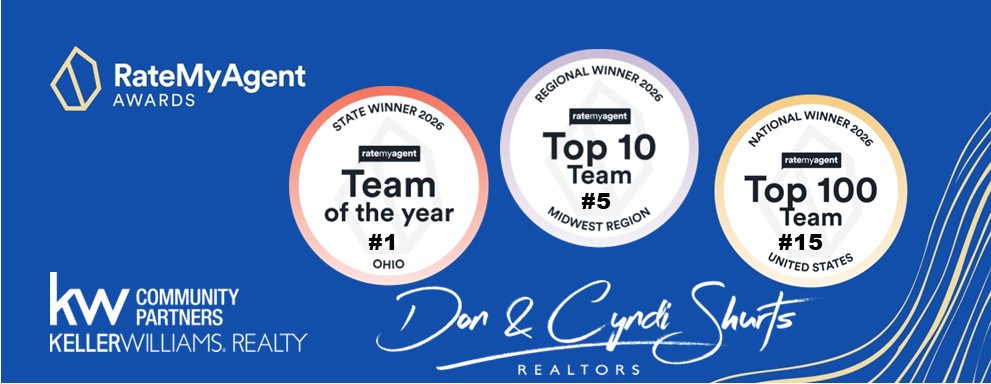
That is one reason the 2026 RateMyAgent Awards matter. Don & Cyndi Shurts of Keller Williams Community Partners Realty were recognized on March 11 of this year in the 2026 RateMyAgent Awards as one of the most highly regarded teams on the platform.

2026 RateMyAgent Honors Received by Don & Cyndi Shurts

  • Ohio Team of the Year
  • No. 5 Team in the Midwest Region
  • No. 15 Real Estate Team in the United States

For home sellers in Dayton, Beavercreek, Fairborn, Centerville, Springboro, Bellbrook, Kettering, Xenia, Oakwood, and across the Miami Valley, these awards stand out because they are not based only on sales totals. RateMyAgent says its awards are based on a combination of verified client reviews and sales performance, making them especially meaningful for consumers looking for a Realtor with client reviews.

Thinking About Selling Your Home?

If you are interviewing agents and want a trusted opinion on pricing, timing, preparation, and marketing, Don & Cyndi Shurts would be honored to help.

What Makes the RateMyAgent Awards Different?

Many real estate awards are built primarily around production. They recognize agents for sales volume, number of units sold, or internal rankings within a brokerage or association. Those awards can reflect success and consistency, but they do not always tell a homeowner what it was actually like to work with the agent.

RateMyAgent takes a different approach. The company emphasizes verified reviews tied to real property transactions, combined with sales performance. That means the awards are designed to reflect not only how active an agent is, but also how clients felt about the experience.

That distinction matters. For homeowners looking for recommended real estate agents in Dayton Ohio, the real question is often not just, “How many homes did this agent sell?” It is, “Will this agent communicate clearly, market my home effectively, protect my interests, and guide me well from start to finish?”

Why This Difference Matters to Home Sellers

If you are preparing to list your home, production matters. Experience matters. Strategy matters. But client experience matters too.

A strong listing agent should know how to price your home correctly, position it competitively, prepare it for the market, negotiate skillfully, and navigate deadlines with confidence. But sellers also need an agent who is responsive, calm under pressure, and trustworthy when the process becomes complicated.

That is why review-based recognition can be so valuable. It reveals qualities that raw numbers do not always capture well: communication, professionalism, follow-through, advocacy, and trust.

A Recognition That Stands Out in a Large Field

The significance of these awards becomes even clearer when you consider the size of the platform. According to company materials, RateMyAgent is part of the Renowned brand, which is used by more than 350,000 agents and over 9,800 real estate offices worldwide, along with 100,000+ Curated Social users throughout the U.S. and Canada.

On RateMyAgent, Don & Cyndi Shurts’ team page shows 190 reviews, while Don’s individual RateMyAgent profile shows 169 reviews overall and Cyndi's individual profile show 156 reviews. Their website also states they have 235+ 5-star Google reviews. For homeowners comparing highly-rated real estate agents, that kind of consistent public feedback helps build confidence.

Beavercreek Realtor Cyndi Shurts

“We have always believed that excellent real estate service should feel steady, thoughtful, and personal. When clients trust us with such an important move, they deserve honest guidance, clear communication, and the confidence that someone is truly looking out for them. That is why this recognition means so much.”

— Cyndi Shurts

Springboro Real Estate Agent

“Awards are appreciated, but the real reward has always been the trust of the people we serve. If our clients felt informed, protected, and well cared for throughout the process, that matters more than anything else. Reviews that reflect that kind of experience are deeply meaningful to us.”

— Don Shurts

Serving Home Sellers Across Dayton and the Miami Valley

Don & Cyndi Shurts serve home buyers and sellers throughout Dayton, Beavercreek, Fairborn, Centerville, Springboro, Bellbrook, Kettering, Xenia, Oakwood, and surrounding communities. Their work includes helping first-time sellers, move-up sellers, downsizers, military families near Wright-Patterson Air Force Base, and clients looking for guidance from luxury real estate agents in Dayton Ohio.

If you are searching for a Keller Williams Realtor in Dayton Ohio, a realtor with client reviews, or trusted Realtors to help you list your home, choosing someone with both strong results and strong client feedback can give you an added layer of confidence.

Communities Served:
Dayton, Beavercreek, Fairborn, Centerville, Springboro, Bellbrook, Kettering, Xenia, Oakwood, and surrounding Miami Valley communities.

The Bigger Takeaway for Sellers

The RateMyAgent awards do not replace the importance of local knowledge, pricing strategy, professional marketing, negotiation skill, or market timing. But they do offer something many homeowners find reassuring: outside validation rooted not only in performance, but also in the real experiences of past clients.

For sellers deciding who should represent them, that is powerful. It is one thing to claim strong service. It is another to have a large body of public reviews and a national platform recognize that service.

Ready to Talk About Selling?

Whether you are thinking about moving now or simply want a professional opinion on your home’s value, Don & Cyndi Shurts are here to help.

  • Pricing strategy for your home
  • Timing and market conditions
  • Pre-listing preparation
  • Marketing that helps your home stand out
  • Neighborhood-specific insight for Dayton-area communities

Helpful Resources

Frequently Asked Questions

Why are the RateMyAgent Awards different from many brokerage and board awards?

RateMyAgent says its awards are based on verified client reviews connected to real property transactions, along with sales performance, rather than relying only on sales volume or number of units sold.

How many houses did Don & Cyndi sell in 2025?

Don & Cyndi Shurts sold 44 homes, with a total sales volume of 18.4 million dollars.

How many reviews do Don & Cyndi Shurts have?

Don and Cyndi have hundreds of client reviews on various real estate platforms, 235 reviews on Google, 61 on Zillow, 159 on Realtor.com, and 190 on RateMyAgent.

How long have Don & Cyndi been selling houses?

They have been real estate agents for 22 years and serve buyers and sellers across Dayton, Beavercreek, Fairborn, Centerville, Springboro, Bellbrook, Kettering, Xenia, Oakwood, and the greater Miami Valley with Keller Williams Community Partners Realty.

Don & Cyndi Shurts
Keller Williams Community Partners Realty
4172 Indian Ripple Rd
Beavercreek, OH 45440
info@MiamiValleyDreamHomes.com
937-241-2124 | 937-604-5194
MiamiValleyDreamHomes.com


March 16, 2026

Oakwood, Ohio Homes for Sale: What Makes This Market Different Right Now

Searching for Oakwood, Ohio Homes for Sale means stepping into a market that feels distinct from nearby Dayton communities. You’ll notice a mix of historic architecture, updated interiors, and well-established streets. That combination shapes both pricing and how quickly homes move.

Don & Cyndi Shurts assist buyers in Oakwood and nearby areas, where demand mirrors each property's character and location. Homes here don’t always follow the same patterns you see in other parts of the Miami Valley. 

In this article, you’ll see what makes Oakwood stand out, what to look for in current listings, and how to approach your search with more clarity. You’ll also learn how local conditions influence pricing, timing, and competition. That context can make each step feel more straightforward.

Current Homes on the Market in Oakwood

Oakwood offers everything from renovated brick homes near local shops to larger, architecturally unique properties on established streets. Prices run the gamut, so you can filter MLS results by beds, baths, and price to zero in on what works for you.

Active Listings Snapshot

Right now, you’ll spot single-family homes, duplexes, and some vacant lots listed in Oakwood. Most MLS entries show 3–5 bedrooms and 2–6 bathrooms, including both historic homes and a handful of newer builds.

Adjust the MLS filters by price, beds, baths, and status (Active, Under Contract) to focus on homes that fit your budget and timeline. That way, you avoid wasting time on listings that don’t match your criteria.

Sample listing types:

  • Renovated brick homes close to the Shops of Oakwood and parks.
  • Larger, architecturally interesting homes with 4–6 bedrooms.
  • Duplexes and infill lots for building in Pointe Oakwood and similar neighborhoods.

Check the MLS # if you want the full listing record and history. You can save searches and set alerts so you’ll know when new homes pop up.

Average Price and Days on Market

Oakwood prices stretch from lower six-figure homes to multi-million dollar listings for the higher end. Recent MLS data (as of 3/15/2026) shows both new and sold activity, so expect a wide range.

Homes in the mid-range tend to move faster. High-end, architecturally distinct properties often stay listed longer. You can sort listings by “Days on Market” to see what’s new or how long a home’s been available.

Compare the list price to the sale price by checking recently sold listings. That’ll give you a real sense of what similar homes actually go for in Dayton.

Notable Neighborhoods and Areas

Oakwood features a few areas buyers keep an eye on. East Drive and Ridgeway Road have plenty of well-kept, classic homes with mature yards. These streets pop up a lot in MLS searches for character properties.

Pointe Oakwood and newer infill parcels offer some building opportunities and newer-construction listings. These appear as vacant-lot or new-build entries, so filter for them if you’re thinking about building.

Areas near the Shops of Oakwood and Hills and Dales Metro Park attract buyers who want walkable shopping and green space. Use neighborhood keywords in your MLS search to narrow down to these pockets.

If you’re moving to Dayton, comparing Oakwood’s neighborhoods to other Miami Valley communities helps you weigh value, commute, and lifestyle.

Exploring Home Features and Listings

Listings highlight what matters: bedroom and bathroom counts, square footage, lot size, and sometimes a virtual tour. These details help you compare homes and plan your next move.

Bedrooms and Bathrooms Overview

Check for clear counts and layouts in each listing. Many Oakwood homes have 2–4 bedrooms, while some larger ones show 5. Pay attention to where the bedrooms are—main-level versus upstairs changes daily life and resale value.

Look at the bathroom details. Listings usually separate full and half baths (like 2 full, 1 half). Features like dual vanities, updated showers, or a tub/shower combo can make a difference. Primary bathrooms with double sinks and a separate shower and tub offer extra comfort.

Scan for ensuite bedrooms or extra guest baths. These influence morning routines and guest privacy. If the listing doesn’t explain the layout, ask for a floor plan or have your agent confirm it.

Square Feet and Lot Size Details

Square footage tells you how much indoor space you get. Oakwood homes usually run from about 1,200 to over 3,000 sq ft, depending on age and style. Finished basements add livable space and bump up value.

Lot size matters for outdoor use and future projects. Smaller lots might be 0.1–0.2 acres, while larger ones go over 0.5 acres. If the listing just says “large” or “spacious,” ask for the exact parcel size.

Compare square feet to lot size to judge yard space, privacy, and landscaping potential. Also, check if driveways, garages, or outbuildings are included in the lot description.

How do home size and lot size affect property value?

Home size and lot size affect property value because both influence usability and long-term appeal. The Federal Housing Finance Agency tracks how property characteristics contribute to home price trends across different markets. 

Larger homes or lots may increase value, but layout, condition, and location also play a major role. Buyers often compare these factors together when deciding what a home is worth.

Highlighting Virtual Tour Options

Virtual tours save time and help you narrow down homes before visiting in person. Look for 3D walkthroughs, video tours, or high-res photo galleries in listings. A 3D tour lets you measure rooms and get a sense of the layout from your couch.

If there’s no virtual tour, ask the agent for a live video walkthrough. You can request close-ups of flooring, windows, or cabinetry. Double-check if the tour shows finished basements or attic spaces—these often get skipped but matter for usable area.

Use virtual tours alongside listing facts like beds, baths, and square footage. They help you spot updates or needed repairs. Save your favorite tours to compare later.

Working with Trusted Real Estate Professionals

Having the right local help really smooths the home search. You’ll want agents who know Oakwood’s streets, home styles, and recent sale prices. A good pro guides you through inspections, offers, and closing with steady, practical advice.

Spotlight on Local Brokerages

Look for brokerages with a steady presence in Dayton and the Miami Valley. Choose teams that share local market updates, list recent Oakwood sales, and have experience with Cape Cods, Tudors, and updated bungalows.

Ask if the brokerage offers buyer representation, seller marketing, and referrals for local lenders or inspectors. A connected office helps you book showings quickly and may have pocket listings in Oakwood.

Check how the brokerage communicates—do they use text, email, or a client portal? Pick one that matches your style. Good communication goes a long way in reducing stress.

Finding the Right Agent for You

Pick an agent who listens and asks about your must-haves and budget. You want someone who explains Dayton market trends in plain language and lays out timelines for inspections, mortgage approval, and closing.

Look for agents who share recent Oakwood listings and comparable sales. Ask for examples of buy-side and sell-side work in similar neighborhoods. Make sure they’ll coordinate with your lender and inspector and break down contingencies and negotiations.

Trust and responsiveness matter. Choose an agent who calls back promptly, sets expectations, and supports you through decisions without pressure. That way, you’ll feel confident at every step.

Financing Your Oakwood Home Purchase

You’ll pick a loan that fits your budget, timeline, and plans for the home. Options include fixed or adjustable rates, government-backed loans, and jumbo or conventional mortgages for higher-priced homes in Dayton.

Types of Mortgage Lending Products

  • Conventional loans: Good for buyers with steady income and solid credit. Down payments start at 3–5%, but a larger down payment lowers monthly costs.
  • FHA loans: Backed by the government, helpful if your credit’s lower. You can put down as little as 3.5%, but mortgage insurance is required.
  • VA loans: For eligible veterans and service members. Often, no down payment and lower rates.
  • USDA loans: For homes in qualifying rural parts of the Miami Valley. They can mean low or zero down payment.
  • Jumbo loans: For homes above conforming limits. Expect stricter credit and bigger down payments.
  • Adjustable-rate mortgages (ARMs) vs Fixed-rate mortgages: ARMs start lower but can rise. Fixed-rate loans keep the same rate, so payments stay predictable.

When comparing, keep this checklist handy:

  • Interest rate and APR
  • Down payment and PMI or mortgage insurance
  • Loan term (15, 20, 30 years)
  • Prepayment penalties or fees

Navigating Loan Pre-Approval

Start with pre-approval before you make offers. Pre-approval shows sellers you’re ready and helps you set a realistic search range in Oakwood and Dayton.

Gather these documents to speed things up:

  • Recent pay stubs, W-2s, and two years of tax returns
  • Bank and investment account statements
  • ID and Social Security number
  • Details on debts and monthly payments

Lenders check your credit, income, and debt-to-income ratio. A steady job and a strong ratio help your case. Ask for a Loan Estimate to compare fees and rates. Get pre-approved by two lenders, but avoid too many hard credit pulls close together.

The Home Buying Experience Step-by-Step

You’ll go from searching to closing through a series of steps: narrow choices, make an offer, handle inspections and financing, then finish the legal details. Each step has practical actions to keep you organized and confident.

Filtering and Saving Favorite Properties

Start with your must-haves and budget for Dayton and the Miami Valley. Filter for price, beds, baths, square footage, and lot size. Add keywords like “hardwood floors” or “finished basement” to find what matters most.

Save listings you like. Note asking price, days on market, and price changes. Compare nearby homes to see value. Ask about off-market or upcoming Oakwood listings to widen your options.

Keep a short list of your top five. Schedule showings quickly when you see something promising. Take pictures, jot notes, and mark pros and cons after each visit so you can compare later.

Making Offers and Closing

Work with your agent to craft a competitive offer based on recent sales. Include earnest money, a closing date, and any seller requests you’re willing to meet. Spell out contingencies: inspection, appraisal, and financing.

After acceptance, schedule a home inspection right away. Use the report to request repairs or concessions. Stay in touch with your lender to keep the loan process moving and confirm the appraisal matches your offer.

At closing, review documents carefully. Bring ID, proof of funds, and signatures. Your agent or closing attorney will walk you through title transfer, prorations, and closing costs. Once everything’s signed and funded, you get the keys and the home’s yours.

Legal Protections for Buyers

The Fair Housing Act and Ohio rules require sellers and agents to treat buyers equally. You deserve fair access to listings, showings, and financing. If someone treats you unfairly, go ahead and report it to local authorities.

Write out all terms and deadlines in your contract. Contingencies help you—an inspection contingency lets you ask for repairs, and an appraisal contingency can protect your loan approval. Hold onto every document and email.

Order a title review and survey to spot liens, easements, or boundary problems. Title insurance shields you from old ownership issues. If legal language gets confusing, ask your agent or attorney to explain things and help you stay on track with deadlines.

Making Sense of Oakwood’s Unique Market

Looking at Oakwood, Ohio Homes for Sale becomes easier when you understand what sets this market apart. The mix of established homes, varied pricing, and local demand creates a different experience than many nearby areas. Recognizing those patterns helps you approach your search with more clarity.

Don & Cyndi Shurts stay closely connected to the Dayton market, including Oakwood’s shifting inventory and pricing trends. Watching how these factors change helps buyers adjust expectations and timing. That perspective can make decisions feel more grounded and less uncertain.

If you’re considering a move in Oakwood, take time to explore listings carefully and understand how the market behaves. A clear approach can make the process feel more manageable and help you move forward with confidence.

Frequently Asked Questions

What should I look for in Oakwood, Ohio homes for sale?

You should look for layout, condition, location, and recent comparable sales when reviewing Oakwood, Ohio homes for sale. These factors help you understand value and how a home fits your needs.

Are Oakwood, Ohio homes for sale more expensive than nearby areas?

Yes, Oakwood, Ohio homes for sale can be more expensive than nearby areas because of location, established neighborhoods, and consistent demand. Prices vary depending on size and condition.

How fast do Oakwood, Ohio homes for sale usually sell?

Oakwood, Ohio homes for sale usually sell at different speeds depending on price and condition. Well-priced homes in desirable locations tend to move faster than higher-priced or less updated properties.

Do I need pre-approval before viewing Oakwood, Ohio homes for sale?


Yes, you need pre-approval before viewing Oakwood, Ohio homes for sale if you plan to make an offer quickly. It helps define your budget and strengthens your position with sellers.

Posted in homes for sale
March 14, 2026

Is It a Good Time to Sell My Home? What the Market Is Saying

If you're asking Is It a Good Time to Sell My Home, you're likely weighing more than just timing. You're looking at your own plans, the local market, and what kind of outcome you want from the sale. 

Don & Cyndi Shurts work with sellers across the Dayton area, where pricing, timing, and buyer expectations vary by neighborhood. Some homes still move quickly with the right approach, while others require more strategy to attract attention. 

In this article, you’ll see how current market conditions, timing, and personal factors come together. You’ll also get a clearer view of how pricing, mortgage rates, and preparation affect your outcome. 

Looking at the Local Market: Dayton & Miami Valley Trends

The Dayton and Miami Valley real estate market keeps showing steady home value increases and solid buyer demand. If you know whether you’re in a buyer’s or seller’s market, how local factors affect your timing, and what recent sales data says, you’ll have a better sense of when to list your property.

Spotting a Buyer's vs. Seller's Market

A seller’s market shows up when more buyers compete for fewer homes. In these conditions, homes usually sell fast, sometimes with multiple offers. Dayton has seen a lot of this lately, with inventory staying low even though more listings are popping up.

A buyer’s market flips that around—more homes than buyers. Properties take longer to sell, and sellers might have to adjust prices or offer perks. Right now, the Miami Valley still feels like a seller’s market, with homes moving fast and prices climbing.

You can figure out your market by checking days on market and inventory levels. A balanced market has about six months of supply. Dayton has just over a month’s supply, so sellers still hold the advantage.

How do you know if it’s a seller’s market or a buyer’s market?

You know if it’s a seller’s market or a buyer’s market by looking at inventory levels and how quickly homes are selling. The National Association of Realtors states that a seller’s market typically occurs when inventory levels are low, and sales are quick. 

Conversely, a buyer’s market is characterized by higher inventory and longer listing durations. These indicators help sellers understand how much leverage they may have. Market balance can shift even within the same region.

How Local Market Conditions Shape Your Decision

Local market conditions decide how quickly you’ll sell and what price you’ll get. When demand beats supply in the Miami Valley, you’re likely to sell fast and maybe get multiple offers. That’s a win for sellers ready to move.

Rising home values in Dayton could mean a better return than just a few years ago. Median prices keep rising, which can boost your equity. Still, you’ll need to think about where you’re headed next and what that market looks like.

Each community—Beavercreek, Fairborn, Kettering, Centerville—has its own quirks. Some neighborhoods move faster than others, depending on what buyers want and what’s available right now.

Getting to Know Recent Market Activity

Recent Dayton market activity paints a pretty strong picture for sellers. Here’s what’s going on:

Sales Volume and Pricing:

  • Home sales are up over last year
  • Median sales prices jumped by double digits
  • Total sales volume climbed a lot
  • Properties are selling at a steady clip

Inventory and Listings:

  • New listings have increased
  • Overall inventory still feels tight
  • Homes are selling in weeks, not months
  • More choices for buyers haven’t slowed sales

With prices rising and homes selling quickly, you can price your home competitively and still attract serious buyers. Demand is solid, even with a bit more inventory than before. The market isn’t oversaturated, but buyers are out there looking for the right fit.

Seasonality and Timing: Why When You Sell Matters

The month and season you list your home can change how fast it sells and the offers you get. Some times of year bring more buyers, while others see slower action and longer waits.

Best Time to Sell versus the Worst Time

Spring and early summer usually give you the best shot for a quick sale at a strong price. May and June tend to be hot months for sellers in Dayton, with lots of buyer activity and competition.

On the flip side, November through February can be tough. Fewer buyers are out, with holidays, weather, and school schedules slowing things down. Homes listed in winter often sit longer and might need price tweaks to get noticed.

But timing isn’t just about the calendar. If your house doesn’t fit anymore or you’re relocating for work, waiting for the “perfect” month might not matter. Sometimes, the best time to sell is simply when life says it’s time.

Finding the Best Month and Week to List

If you have some wiggle room, aim for late April or early May. That puts your home in front of buyers who want to move before school starts up again. Listing on a Thursday or Friday helps too. 

Buyers have the weekend to tour homes, and listings at the end of the week usually get more showings right away. I’d skip listing right before major holidays or during big vacation weeks in July and August. Summer is strong overall, but those weeks can slow things down.

Why Spring and Summer Lead the Pack

Warmer weather brings buyers out in the Miami Valley. Families like to move during the summer so kids aren’t switching schools mid-year. Plus, homes look better with green yards and more daylight.

Spring inventory isn’t as high as you’d think. Many people wait for lower mortgage rates or hold off until later. If you list when fewer homes are out there, yours stands out more.

Low inventory and steady demand often spark multiple offers. That competition can push your sale price over asking, especially if you price it right from the start.

The Personal Factors: Life, Lifestyle, and Moving Plans

Your own life often matters more than the market when it comes to selling. Job changes, family needs, or lifestyle shifts can make now the right time, even if the market isn’t perfect.

Relocation and Life Events

Major life changes usually make the decision clear. If you’re moving for a job—maybe to Wright-Patterson Air Force Base or a hospital—you’re on a timeline. Sometimes you just can’t wait for ideal market conditions.

Family changes like marriage, divorce, or caring for parents can force a move too. These aren’t things you can just put off while hoping for better timing.

Health or money issues sometimes mean you need to act fast. If keeping up with your home is tough, waiting to sell could make things worse. Your well-being should always come first.

Downsizing or Upsizing: Is Now the Moment?

Space needs shift as life changes. If you’re raising a family in a tiny place, you probably feel the squeeze already. Maintaining a big house after the kids move out can feel like too much work and cost.

Downsizing often makes sense when:

  • Home maintenance takes up too much time
  • Utility bills and taxes are a burden
  • You want to free up cash for retirement or other plans
  • Stairs or yard work are getting tough

Upsizing usually happens when:

  • You need a home office or workspace
  • Your family is growing, or you’re planning to expand
  • You want more storage or outdoor space
  • You’re hosting family more often

The right time depends on your daily life. If your home doesn’t fit anymore, staying put could cost you more than waiting for a better market.

Weighing Your Next Move

Deciding whether to sell now or later takes some honest self-reflection. Write down what works and what doesn’t in your current home. Look at both the emotional and practical sides.

Think about your timeline. If you need to move for work or family in six months, you’re on a deadline. If you’re just considering a change, you’ve got more flexibility to weigh market timing against personal needs.

Financial readiness matters. Do you have enough equity for a down payment on your next place? Could you handle two mortgages for a bit if needed? These questions help you decide if now’s the right time or if waiting would be smarter.

It never hurts to talk things through with local pros who know the Miami Valley market. They can help you see how your timeline lines up with what’s happening in Dayton and nearby areas.

Financial Considerations: Crunching the Numbers Before Selling

Before you list your home in Dayton, you need to know the numbers. Your equity, closing costs, and listing price all shape what you’ll actually take home at closing.

Home Equity and Your Sale Proceeds

Your home equity is what your house is worth minus what you still owe. If your place is valued at $250,000 and you owe $150,000, you’ve got $100,000 in equity.

This equity forms the base for your sale proceeds. When you sell, that money can help with your next down payment. Homeowners in places like Beavercreek, Springboro, and Centerville often find they’ve built more equity than they realized, thanks to rising values.

To get a good estimate, start with your home’s current value. Online tools can help, but local market trends in your neighborhood will affect the actual number.

Understanding Closing Costs

Closing costs usually run from 1% to 3% of your sale price. On a $250,000 home, that’s $2,500 to $7,500.

Here’s what typically comes out of your proceeds:

  • Title insurance and transfer fees – Protect the buyer and handle ownership transfer
  • Attorney or escrow fees – Takes care of the legal paperwork
  • Recording fees – Files the sale with the county
  • Outstanding property taxes – Any taxes owed through closing
  • Home warranty (if offered) – Sometimes part of negotiations

You’ll also pay your agent’s commission, which comes out at closing. These costs lower your equity, so keep them in mind as you plan your next move. Knowing the numbers upfront saves you from surprises later.

Estimating Your Listing Price

Your listing price should reflect what’s happening right now in your Miami Valley community. If you price too high, you’ll sit. Too low, and you leave money behind.

Check out recent sales of similar homes nearby. Focus on homes that actually sold, not just what’s for sale. Dayton’s market varies by area—a home in Kettering might sell differently than one in Bellbrook.

A comparative market analysis looks at:

  • Square footage and layout
  • Age and condition
  • Recent renovations or updates
  • Lot size and outdoor features
  • Days on market for similar homes

Your price should attract buyers and maximize your return. The right number depends on your neighborhood’s demand and how quickly homes are selling. Getting it right from the start gives you the best shot at a smooth sale and strong offers.

How Mortgage Rates and Offers Influence Your Sale

Mortgage rates shape what buyers can afford, which affects your offers and how long your home sits on the market. If you understand this link, you can set your price and expectations realistically.

The Role of Mortgage Rates for Buyers and Sellers

When mortgage rates go up, buyers end up with bigger monthly payments. A jump from 3% to 6% can cut buying power by thousands, so fewer people can pay your asking price. This shift puts pressure on the Dayton real estate market. 

Buyers get pickier and watch their budgets closely. They want homes that clearly offer value for the price. Lower rates tend to draw in more buyers. Folks can afford higher prices, and that can spark competition. Higher rates do the opposite—they shrink the buyer pool and slow things down.

  • Price your home with current rates in mind
  • Expect homes to take longer to sell when rates are high
  • Get ready to negotiate when buyers have tight budgets

Why Offers and Days on Market Matter

In 2025, homes in the Miami Valley are staying on the market longer than in past years. The median is now 58 days, almost twice as long as in 2021 or 2022. With more time to shop, buyers compare more options. 

They're not jumping into bidding wars or skipping inspections. Instead, they're careful and might ask for concessions. You might get offers below your asking price. Buyers could want help with closing costs or repairs. That's just how it goes when inventory rises, and urgency fades.

  • Start with a competitive price to draw serious buyers
  • Think about reasonable concessions to get the deal done
  • Work with someone who really knows the local market

If a home sits too long, buyers start to wonder about the price. Fresh, well-priced listings get more attention and better offers.

Getting Your Home Ready: Strategies to Attract Miami Valley Buyers

First impressions count when you're selling in the Dayton area. If you focus on curb appeal and get good local advice, you can attract more buyers and maybe sell faster.

Maximizing Curb Appeal

The outside of your home is what buyers see first, whether they're driving by or scrolling online. Even small improvements can change how your place feels.

Start with the basics. Clean gutters, power wash siding and walkways, mow and edge your lawn. These simple steps don't cost much but really boost your home's look.

Try these upgrades for Miami Valley homes:

  • Fresh paint on the front door – A clean, modern color can make your entrance pop
  • Updated house numbers – New, easy-to-read numbers lift your home's vibe
  • Seasonal plantings – Add color with flowers or shrubs that fit Ohio's seasons
  • Outdoor lighting – Lit paths and entries help buyers picture relaxing evenings

You don't have to spend a fortune on landscaping. Focus on clearing clutter, trimming bushes, and making sure your place looks tidy. Many buyers in Beavercreek and Centerville love homes that feel cared for and move-in ready.

Partnering with a Real Estate Agent

When you team up with a real estate agent who really knows the Miami Valley, you get a leg up. Agents who live and work here understand what buyers in Dayton, Kettering, and nearby towns want right now.

The right agent points out which updates could boost your home's value. They help you set a smart price based on recent neighborhood sales and market conditions. Local expertise matters because Dayton's market has its own quirks—it's not just like every other city.

Agents handle marketing, showings, and all those little details that eat up your time. They bring in professional photographers, post your home on top sites, and set up buyer visits. 

With years of experience around the Miami Valley, good agents know how to catch the eye of serious buyers.

And when it comes to negotiating and sorting out contracts, their know-how really comes through. That support makes the whole process less stressful and helps you feel good about closing the deal.

Bringing It All Together Before You Decide

Deciding if it's a Good Time to Sell My Home comes down to how market conditions and personal timing intersect. The right moment is not just about trends, but about how those trends align with your goals. Seeing the full picture helps you move forward with more clarity.

Don & Cyndi Shurts stay closely connected to how the Dayton-area market shifts from one season to the next. Watching how pricing, demand, and inventory interact gives sellers a more grounded view of their options. That insight helps shape decisions that feel measured rather than rushed.

If you’re considering selling, take time to look at both your situation and the market around you. A steady, informed approach can help you move forward with confidence and fewer surprises.

Frequently Asked Questions

Is it a good time to sell my home right now?

Whether it's a good time to sell my home right now depends on your local market conditions and personal goals. Strong demand and low inventory can favor sellers, but timing should align with your plans.

What factors determine if it’s a good time to sell my home?

The factors that determine if it’s a good time to sell my home include local inventory, buyer demand, mortgage rates, and your financial readiness. These elements shape both timing and potential sale price.

How do mortgage rates affect selling my home?

Mortgage rates affect the sale of my home by influencing buyer affordability. Higher rates can reduce demand, while lower rates often increase competition and strengthen offers.

Should I wait for a better market before selling my home?


Whether you should wait for a better market before selling my home depends on your situation. If your home no longer fits your needs, waiting may not offer enough benefit to delay your plans.

Posted in homes for sale
March 11, 2026

How Acreage Affects Home Appraisal: What Actually Adds Value?

If you're looking at land and wondering How Acreage Affects Home Appraisal, you're not alone. It’s easy to assume that more land automatically means a higher value, but that’s not always how it works. In many cases, the way land is used matters more than how much of it there is.

Don & Cyndi Shurts work with buyers and sellers in Dayton, where acreage varies by location and zoning. A few extra acres in one township may add clear value, while in another, it may have little impact. These differences often come down to how the land fits into local market expectations.

In this article, you’ll see how appraisers evaluate land, what actually influences value, and where assumptions can lead you off track. You’ll also learn how zoning, usability, and market demand shape the final number.

Acreage and Its Ripple Effect on Home Appraisal

Land value shapes your home's appraisal, but it's rarely simple. The acreage you own interacts with the market and appraisal techniques—sometimes boosting, sometimes capping your property's worth.

Why More Land Doesn't Always Mean More Value

You might think a five-acre place should appraise higher than a half-acre lot. But that's not always true in Dayton's real estate world.

Appraisers check what buyers in your area actually want. In some Miami Valley towns, big lots are tough to keep up and less attractive to folks who don't need the space. If buyers mostly want small, easy yards, your extra land might not bump up value as you hope.

Location often matters more than size. A small lot in a great neighborhood might appraise higher than a bigger one far from everything. Usable land counts, too. Steep slopes, swamps, or landlocked corners add little to value since buyers can't build or use them easily.

The Balance Between Property Size and Market Trends

How acreage affects value changes with the market. Sometimes, buyers want privacy and space. Other times, they go for smaller, simpler lots.

Right now, trends differ across Miami Valley areas. Some places favor compact lots for busy professionals. Others draw people who want gardens, sheds, or future projects.

Your value depends on what buyers want right now. If you’re selling three acres but most folks want a quarter acre, appraisers may struggle to find similar sales. That makes it tricky to set a clear value. But if big lots are hot and you have one, your land's value can jump.

How Appraisers Approach Different Lot Sizes

Appraisers use specific steps to size up acreage. They don't just multiply acres by a set price.

For lots under an acre, appraisers check recent sales of similar properties nearby. They compare your lot to others in the area to see what buyers paid. This works best when there are plenty of comps.

Bigger parcels get a different treatment. With multiple acres, appraisers break value into chunks:

  • The first acre (with your house) is worth the most
  • Extra acres usually have less value per acre
  • Unusable land may barely add anything

In Dayton’s rural outskirts, appraisers might separate land sales from home sales. They’ll check what vacant land goes for, then add your home's value. This helps them build a clearer picture when direct comps are scarce.

How Appraisers Size Up Land: Price per Acre and Beyond

Appraisers start with price per acre, but land appraisal isn’t just numbers. They look at recent sales, how extra acres matter, and what’s going on in the market right now.

Using Comparable Sales in Your Area

Appraisers hunt for sales of similar-sized properties in your neighborhood. They want homes sold recently—usually within six months—to set a base price per acre. It's not just about total acreage. Appraisers check the land’s shape, usability, and road access. 

Five flat acres aren’t the same as five acres of steep hillside. Comparable sales can look wildly different across Miami Valley communities. What buyers pay in Centerville can differ from Germantown or Brookville. Appraisers adjust for these location quirks.

Key factors in comparable sales:

  • Sale date (the newer, the better)
  • Total and usable acreage
  • Zoning and allowed uses
  • Available utilities
  • Distance to main roads

Diminishing Returns: Why Each Extra Acre Isn't Equal

The first acre usually has the highest value per acre. Extra acres don't add as much, since most buyers need less land for daily life.

If one acre is worth $50,000, two acres might go for $85,000—not $100,000. The second acre adds value, but not as much. By five or ten acres, each new acre adds even less.

That’s because land near the house is most useful. You use it for your yard, sheds, or outdoor space. Further land needs more upkeep but often gives less back for most people.

Total Acres

Approximate Value per Acre

1 acre

$50,000

2 acres

$42,500

5 acres

$35,000

10 acres

$28,000

Note: These examples shift a lot depending on location and the market.

The Role of Market Conditions in Land Valuation

Market conditions in Dayton directly shape how appraisers value your acreage. High demand and low inventory push land prices up. More properties than buyers? Values drop.

Appraisers watch local trends to tweak their price per acre. They track how long similar places sit on the market and if sellers cut prices. These signals show if land is rising or falling in value nearby.

Zoning changes and new developments matter, too. If your area announces a new road or changes land use rules, appraisers factor that in. Land that could get rezoned commercial often appraises higher than land zoned for residential.

Bigger economic stuff counts as well. Interest rates, job growth in the Miami Valley, and local incomes all play a part in what buyers will pay. Appraisers mix these big-picture trends with your property’s details.

How do market conditions influence land value in an appraisal?

Market conditions influence land value in an appraisal because supply, demand, and buyer preferences directly affect pricing. The National Association of Realtors reports that changes in inventory and buyer activity can shift the share of land value in overall property value. 

Appraisers adjust their analysis based on these trends and recent comparable sales. This ensures the appraisal reflects current market behavior rather than past assumptions.

What Really Counts: Usable Land, Lot Shape, and Accessibility

Not every acre gets the same treatment. Usable land, easy access, and the size of your home and lot all shape what appraisers decide.

Usable vs. Unusable Land—How It Impacts Value

Appraisers focus on how much land you can really use. A five-acre lot with three acres of hills or swamp won’t appraise like five flat, buildable acres.

Gross acres means total land on your deed, but what matters is what you can build, garden, or play on. Appraisers often use GIS mapping to spot flood zones, wetlands, or rocky patches that limit use.

In the Miami Valley, plenty of properties have wooded, hilly, or creek-side land. These features might look nice, but they don't always boost value. Appraisers compare your place to recent sales of similar parcels with the same usable space, not just total size.

Knowing the difference between gross and usable acres helps you set realistic expectations. More functional land usually means a higher appraisal than the same acreage with less usable space.

When Road Frontage Makes a Difference

Road frontage is how much of your land touches a public or private road. This can really sway your appraisal, especially outside city limits.

Land with direct road access is easier to build on, split up, or sell later. If your land is landlocked or needs an easement from a neighbor, appraisers usually drop the value. They check comps and adjust for access quality.

The road type counts, too. Frontage on a paved county road usually beats a gravel or private lane. And if you need utilities, road frontage often makes running water, power, or internet lines simpler and cheaper.

Square Footage of Both Home and Land

Appraisers look at the square footage of your house and the total lot size. Both matter, but the weight shifts by location.

In more developed parts of the Miami Valley, home size matters more. A 2,000-square-foot house on one acre might appraise close to the same house on two acres if bigger lots are rare. But in rural areas, land size can tip the scales—if it’s usable and kept up.

Your home's footprint versus lot size affects value, too. A big house on a tiny lot feels cramped. A smaller house on several acres gives you room to grow or build. Appraisers compare your place to recent sales with similar home-to-land setups.

When you look at appraisals, check how your numbers stack up against comparable properties. Knowing this balance helps you make smarter real estate choices.

Rules, Limits, and Local Guidelines: Zoning's Influence

Local zoning rules can limit what you do with your land, and lending guidelines might cap how much acreage appraisers count. The land’s allowed use shapes its appraised value, too.

Zoning Laws That Can Change Everything

Zoning laws decide how you can use your property. They say that if you can run a business, keep animals, or build extra structures.

In the Miami Valley, these rules shift by township and city. One place might let you keep horses and chickens. A similar lot just down the road might ban animals completely.

Common zoning restrictions that shape acreage value:

  • Minimum lot sizes for new buildings
  • Setback distances from property lines
  • Permissions for agricultural use
  • Allowances for home businesses
  • Limits on accessory buildings

Appraisers check what your zoning allows. Five acres zoned for farming will get valued differently than five acres zoned just for homes. You own the land, but zoning rules decide what you can actually do with it.

Fannie Mae's Take on Acreage Limits

Fannie Mae spells out clear rules for how much land counts in a residential property appraisal. For a conventional loan, appraisers usually include up to 10 acres when they value a single-family home.

If your property has more than 10 acres, the extra land gets handled differently. Appraisers might mention the additional acreage, but they won't value it at the same per-acre rate as the first 10 acres.

This really matters if you're dealing with a larger property near Dayton. A 15-acre homestead won't get full value for all its land in a conventional appraisal. The appraisal focuses on what's considered typical for residential properties.

Key Fannie Mae acreage considerations:

  • 10-acre maximum for standard residential appraisal
  • Excess land may require separate valuation
  • Property must remain primarily residential in nature
  • Commercial or farm operations can trigger different loan types

Highest and Best Use—How Land's Purpose Shapes Value

Appraisers figure out the "highest and best use" for your property during a land appraisal. Basically, they look for the most profitable legal use that's possible and makes sense financially. Your property's best use might not match how you use it now. 

Appraisers check what would bring the most value, considering zoning, market trends, and the land itself. Say you own a 20-acre parcel on the edge of Beavercreek. It could be worth more if split into residential lots, but zoning laws might block that. That changes the whole picture.

The appraiser checks four things:

  1. Legally permissible – What does zoning allow?
  2. Physically possible – Can the land support the use?
  3. Financially feasible – Will it generate an adequate return?
  4. Maximally productive – Which legal use produces the highest value?

This process affects your appraisal. Land that's hard to build on—think wetlands or steep slopes—won't get valued the same as flat, usable acreage, even if both are the same size.

Discrepancies, Surveys, and Real-World Hurdles

Property records and reality don't always line up, and small acreage differences can cause headaches during a home appraisal in the Miami Valley.

Acreage Disputes: Why Numbers May Vary

You might notice different acreage numbers when you compare your tax records, listings, and appraisal. It happens more than you might expect.

Tax assessor records sometimes use old measurements or rounded numbers. County records might rely on outdated GIS mapping. Your deed could list acreage based on decades-old calculations, long before laser tools and GPS.

Different ways of measuring land lead to different results:

  • Deed records often use metes and bounds descriptions
  • Tax assessors may calculate area from aerial imagery
  • GIS mapping systems provide digital measurements that can vary slightly
  • Physical surveys offer the most precise measurements

These differences really matter—they can shift your land value by thousands of dollars in the Dayton area, even if it's just half an acre off.

The Power of a Survey in Clearing Things Up

A land surveyor settles questions about acreage with precise measurements. If you're buying or selling a home with land, a survey can be surprisingly valuable.

Surveyors use specialized gear to find exact property boundaries and figure out the total acreage. They mark corners with stakes or pins and draw up a map showing your property lines. This map usually matters more than tax records or GIS data.

You’ll want a current survey if:

  • Different records show different acreage
  • Your property has odd or winding boundaries
  • It's not clear where your land ends and a neighbor’s begins
  • You’re buying land in a rural Miami Valley area

Appraisers look to survey data when they can, since it gives solid measurements. A survey might cost a few hundred to a few thousand dollars, depending on the land. Sure, it’s an extra cost, but knowing the exact acreage protects you and helps with a fair property value.

Looking Beyond Acreage to Understand Value

Understanding How Acreage Affects Home Appraisal means looking beyond size alone and focusing on how land is actually used and valued in the market. Usability, location, zoning, and buyer demand all shape how acreage contributes to a property’s worth. 

Don & Cyndi Shurts work with clients throughout the Dayton area, where land value can shift based on neighborhood patterns and local demand. Recognizing how these elements interact helps buyers and sellers approach pricing with a clearer mindset. That perspective can make decisions feel more grounded and informed.

If you’re evaluating a property with land, take time to look at how the acreage fits into the broader market. A thoughtful approach can help you move forward with greater confidence and fewer surprises.

Frequently Asked Questions

How does acreage affect home appraisal?

Acreage affects home appraisal by influencing how much land contributes to overall property value. Appraisers consider usability, location, and comparable sales when determining how much the land adds.

Does more land always increase a home’s appraisal value?

No, more land does not always increase a home’s appraisal value because extra acreage may add limited value if it is not usable or aligned with buyer demand.

How do appraisers value extra acreage?

Appraisers value extra acreage by assigning a lower value per acre beyond the primary homesite. They compare similar properties and adjust based on usability and market conditions.

Why is usable land more important than total acreage?


Usable land is more important than total acreage because it directly affects how the property can be used. Appraisers focus on functional space rather than total size.

Posted in home for sale
March 8, 2026

Dayton, Ohio, Real Estate Agents: Who Really Has Your Back in This Market?

Buying or selling a home can feel complicated, especially when the stakes are high and every decision matters. Dayton, Ohio, Real Estate Agents play a key role in helping people move through the process with clarity and confidence. 

Don and Cyndi Shurts of Keller Williams Community Partners Realty work closely with clients throughout the Dayton area. Each neighborhood has different pricing trends, inventory patterns, and buyer expectations. Local experience shapes how a transaction unfolds from the first showing to the final signatures at closing. 

In this article, you’ll see how experienced agents guide buyers and sellers through today’s market. You’ll learn what sets strong professionals apart and how local knowledge influences important decisions. 

Meet Dayton's Top Real Estate Agents

The Miami Valley has many professionals ready to help you buy or sell a home. Knowing what sets local agents apart can help you make a smart choice for your real estate needs.

How Local Agents Stand Out

Local knowledge makes a real difference in the Dayton market. Agents with years of experience understand neighborhood pricing, schools, and community features that don't show up online.

Seasoned professionals have handled many transactions. They know how to solve problems before they grow. They work with local lenders, inspectors, and contractors who can support your transaction.

Client reviews show how an agent communicates and delivers results. Look for verified testimonials on several platforms. Agents who prioritize clear communication and responsiveness get consistent positive feedback.

Specialized certifications show extra expertise. For example, Military Relocation Professionals understand VA loans and PCS timelines. Agents with luxury or equestrian experience bring unique knowledge to those markets.

Dayton's Most Trusted Brokerages

Several national and regional brokerages have offices in the Miami Valley. Coldwell Banker operates under the Anywhere Advisors system and is known for its blue and white branding.

Coldwell Banker Real Estate has served communities for over a century. Their logo is a familiar sight on Dayton yard signs. Agents in this system access strong marketing resources and national networks that help buyers and sellers.

Other brokerages with a solid local presence include RE/MAX and regional firms. Each offers different tools for its agents. What matters most is the agent's knowledge and commitment, not just the brokerage name.

Finding the Right Fit for Your Home Buying Journey

Start by identifying your needs. First-time buyers may want agents who explain each step. Relocating professionals often need virtual tours and detailed neighborhood info.

Interview at least two or three agents before choosing. Ask about their experience with similar properties, their communication style, and how they handle challenges. Notice if they listen to your concerns or only talk about themselves.

Check credentials and reviews on multiple sources. Make sure the agent holds an active license. Look for patterns in how they handle communication and client concerns.

Trust your instincts about compatibility. You'll work closely with this person during an important decision. Choose someone who listens, explains things clearly, and shows genuine interest in your goals.

How Real Estate Agents Guide You from Start to Close

A real estate agent supports you through every part of buying or selling a home. They handle pricing, paperwork, and negotiations. They help you adjust when the market changes.

What Data Helps Explain Local Home Price Trends?

Local home price trends are explained through sales data, inventory levels, and days-on-market statistics. 

The Federal Housing Finance Agency tracks these trends through the House Price Index, which measures home price movement across U.S. regions. These data points help professionals interpret whether prices are rising, stabilizing, or adjusting.

Step-by-Step Support for Buyers

When buying a home in Dayton, an experienced agent guides you through each phase. They listen to your needs and understand your timeline, budget, and priorities.

Your agent explains local market conditions so you can make smart choices. They provide insights into neighborhoods, explain price trends, and help you set your budget.

Key support during your home search includes:

  • Scheduling and attending showings that fit your criteria
  • Explaining inspection results and key repairs
  • Reviewing contracts and disclosures with you
  • Coordinating with lenders, inspectors, and attorneys

They negotiate for you and manage details from offer to closing. Your agent explains the timeline and requirements, so you know what to expect.

Tailored Services for Selling Your Home

Selling your home needs different guidance. An agent helps you set a competitive price based on recent sales and current listings, not just your hopes.

They create a marketing plan for today’s market. This includes professional photos, online listings, and strategies to help your home stand out in communities like Beavercreek or Centerville.

Your agent helps by:

  • Advising on repairs and updates to boost appeal
  • Recommending staging to help buyers picture themselves in the space
  • Managing showings and collecting feedback
  • Reviewing offers and negotiating terms to protect your interests

Your agent also coordinates inspections, appraisals, and closing paperwork. They work with the buyer's agent, title company, and others to keep things moving.

Navigating Market Shifts Together

The Dayton real estate market changes during the year. Your agent helps you adjust your approach as needed. When inventory rises, or mortgage rates shift, they explain what it means for you.

You’ll get advice on timing decisions based on local trends. If homes sit longer, your agent may suggest pricing changes or buyer incentives.

Agents track trends, monitor new listings, and know what buyers want right now. They bring referrals and connections to make the process smoother. Whether you need a home inspector or contractor, they can recommend trusted local professionals.

Making Informed Choices: Local Market Know-How

The Dayton real estate market has seen steady growth, with rising prices and consistent sales. Agents who know Miami Valley communities give you accurate info about pricing, neighborhoods, and what makes each area special.

Understanding the Dayton Real Estate Market

The Dayton area stayed strong through October 2024, with home prices rising and sales steady. This stability allows buyers and sellers to make decisions without feeling rushed.

When looking at homes, you need to know how market conditions affect your options. Current data shows steady demand across the Miami Valley, so homes move at a predictable pace. Days on market and listing activity tell you if you should negotiate or act quickly.

Agents who track these numbers can explain what's happening in specific neighborhoods. They know if inventory is tight in Beavercreek or if more options are opening in Centerville. This helps you plan your search and set realistic expectations.

Insights on Miami Valley Communities

The Miami Valley includes many unique communities. You'll find established neighborhoods near Wright-Patterson Air Force Base, growing suburbs with new homes, and historic areas closer to downtown Dayton.

Each community has its own price range and housing style. Some areas offer older homes with large lots, while others have newer builds with modern layouts. Knowing what's available helps you compare options.

Local agents understand how schools, commute times, and amenities affect home values. They can explain why similar homes are priced differently in nearby towns. This knowledge comes from years of experience, not just online data.

What Makes Neighborhoods Unique

Every neighborhood has features that set it apart. Some have parks and trails within walking distance. Others are near shopping or medical facilities.

Property types vary widely in the Miami Valley. You might find:

  • Ranch homes on half-acre lots in established subdivisions
  • Two-story colonials in family neighborhoods
  • Townhomes and condos near urban centers
  • Newer construction in developing areas

Agents familiar with these communities point out details you might miss. They know which streets have sidewalks, where new development is planned, and how neighborhoods have changed.

Ask about a community's character and what residents value. Some areas have active associations, while others are quieter. Finding the right fit means looking beyond the house to the surrounding area.

Beyond the Transaction: Protecting and Preparing Your Home

Protecting your investment goes beyond closing day. A home warranty can cover repairs, and smart maintenance helps you keep your home's value.

Why a Home Warranty Matters

A home warranty covers major systems and appliances when they break from normal wear and tear. Unlike homeowner's insurance, which covers damage from fires or storms, a warranty handles things like your HVAC, water heater, or kitchen appliances.

This coverage gives you financial predictability. You pay a service call fee instead of a large repair bill. Many Dayton homeowners find that this peace of mind makes budgeting easier and removes stress.

If you're selling, offering a warranty can make your home more attractive. It shows confidence in your home's condition and protects the buyer's investment.

Assurant Home Warranty Options

Assurant offers several plans for different needs and budgets. Coverage often includes:

  • Systems coverage: Electrical, plumbing, heating, and cooling
  • Appliance coverage: Refrigerator, dishwasher, oven, washer, and dryer
  • Optional add-ons: Pool equipment, septic systems, and more

Choose a systems-only plan, appliances-only, or a combination. Assurant provides 24/7 customer service and a network of licensed contractors. When something breaks, you file a claim, pay your service fee, and a technician comes to fix the problem.

Most plans cost between $400 and $600 per year, depending on coverage and home size.

Proactive Steps to Safeguard Your Investment

Regular maintenance prevents small issues from becoming big problems. Protect your home by:

  • Scheduling annual HVAC inspections
  • Cleaning gutters twice a year
  • Testing your sump pump before rainy seasons
  • Checking your water heater for leaks and flushing it yearly
  • Inspecting caulking and weather stripping around windows and doors

Keep records of all maintenance and repairs. This helps with warranty claims and adds value when you sell. Buyers appreciate a well-maintained home with a clear service history.

Consider setting aside 1% of your home's value each year for maintenance and repairs. This fund covers routine upkeep and gives you a cushion for unexpected issues.

Fairness and Integrity in Every Real Estate Experience

Real estate agents in Dayton follow federal laws that protect your rights during home buying or selling. These protections apply to everyone and shape how agents work in the Miami Valley.

How Agents Support Equal Opportunity

Licensed real estate agents follow standards that require them to serve all clients with equal care. You deserve unbiased service whether buying your first home or selling a longtime property.

Agents focus on your needs and qualifications. They show properties based on your budget, location, and must-have features. They avoid assumptions about which neighborhoods might interest you.

When working with you, agents use objective details like square footage, bedrooms, lot size, and amenities. They avoid language that could suggest certain homes are for certain people. This approach helps you make decisions based on facts.

Understanding the Fair Housing Act and Equal Opportunity Act

The Fair Housing Act bans discrimination in housing based on race, color, religion, sex, disability, familial status, or national origin. The Equal Opportunity Act gives similar protections for credit and lending.

These laws protect you at every stage of the real estate process. Agents must not guide you toward or away from certain neighborhoods. Lenders must not deny loans based on protected characteristics. Sellers must not reject offers for discriminatory reasons.

In the Dayton area, you can choose any home that matches your financial qualifications. If someone violates your rights, you can file a complaint with the U.S. Department of Housing and Urban Development within one year.

The Right Guidance Makes All the Difference

Choosing among Dayton, Ohio, Real Estate Agents becomes easier when you understand what experienced professionals actually bring to the process. Local knowledge, steady communication, and careful negotiation shape how smoothly a transaction unfolds. 

Don and Cyndi Shurts work daily within the Dayton housing market, where each community moves at its own pace. Watching pricing shifts and buyer activity across the Miami Valley provides the context clients need to make thoughtful decisions. 

If you’re thinking about buying or selling in the Dayton area, start by learning how the local market works and what to expect along the way. The more informed you are, the more confident each step becomes. Having the right professional beside you can make moving forward smoother.

Frequently Asked Questions

Do Dayton, Ohio, real estate agents really guide the entire buying process?

Yes, Dayton, Ohio, real estate agents guide the entire buying process from property search to closing. They coordinate showings, review contracts, explain inspections, and communicate with lenders and title companies to keep the transaction organized.

How do Dayton, Ohio, real estate agents help sellers price a home?

Dayton, Ohio, real estate agents help sellers price a home by analyzing recent sales, current listings, and neighborhood demand. This market data helps determine a competitive listing price that attracts buyers while protecting the seller’s value.

Why do buyers work with Dayton, Ohio, real estate agents instead of searching alone?

Buyers work with Dayton, Ohio, real estate agents because agents interpret market data, schedule showings, and negotiate contract terms. Their experience often helps buyers avoid mistakes that can delay or complicate a purchase.

When should you contact Dayton, Ohio real estate agents during a home search?

You should contact Dayton, Ohio real estate agents during a home search as early as possible. Early conversations help clarify budget, local market conditions, and the steps required before making an offer.

March 4, 2026

Can I Use My 401k to Buy a House? What Most Buyers Don’t Expect

You’re saving for a home and start wondering: Can I Use My 401k to Buy a House? Many buyers ask this when they want to move sooner, but their down payment savings feel slow. Retirement accounts can provide access to cash, but the rules, taxes, and long-term effects deserve careful attention.

Don & Cyndi Shurts often hear this question from buyers planning a move in the Dayton area. Financing a home involves more than choosing a mortgage program. Understanding how retirement funds interact with taxes, loan approvals, and future savings can shape a smarter strategy.

In the sections ahead, we’ll walk through how 401(k) loans and withdrawals work. You’ll see how each option affects your retirement balance and your ability to qualify for a mortgage. We’ll also look at alternatives many buyers use instead of tapping retirement funds.

Could Your 401(k) Really Help You Buy a Home?

Your 401(k) can give you money for a home purchase through loans or withdrawals, but the rules and taxes depend on if you have a traditional or Roth account. Understanding how these accounts work helps you make better decisions about using them for a down payment.

When Homeownership Dreams Meet Retirement Savings

You’ve built up savings in your 401(k), and now you’re thinking about buying a home in the Miami Valley. It’s natural to wonder if you can use that money.

The short answer is yes, but there are conditions. Most 401(k) plans let you borrow against your balance or make a hardship withdrawal. A 401(k) loan lets you take up to 50% of your vested balance, with a maximum of $50,000. 

You’ll pay yourself back with interest, usually over five years. Hardship withdrawals are another route, but they're permanent. You can't pay the money back. If you're under 59½, you’ll usually face a 10% early withdrawal penalty plus income taxes.

Using your 401(k) for a home means you’ll have less money growing for retirement. You'll want to weigh the benefit of homeownership against your long-term needs.

Can a 401(k) really help you buy a house?

Yes, a 401(k) can help you buy a house if your employer’s retirement plan allows loans or withdrawals. 

The Internal Revenue Service explains that many plans allow participants to borrow up to 50% of their vested account balance, with a maximum loan amount of $50,000. These rules determine how retirement funds can be used toward a home purchase.

How 401(k) Accounts Are Structured

Your 401(k) contributions come straight from your paycheck before you see the money. Many employers match part of what you put in, which is basically free money for retirement.

The account grows tax-deferred, so you won’t pay taxes on earnings until you withdraw funds. Your employer’s plan document sets the rules for loans and withdrawals. Not all plans offer loans, so check with your plan administrator.

Key 401(k) features:

  • Contribution limits of $23,000 in 2026 (or $30,500 if you’re 50 or older)
  • Vesting schedules decide when employer contributions are fully yours
  • Loan provisions differ by plan
  • Investment options picked by your employer

When you leave a job, you can roll your 401(k) into an IRA or your new employer’s plan. Some people find it easier to keep retirement savings in one place.

Traditional vs. Roth 401(k): Why It Matters

The type of 401(k) you have changes how withdrawals get taxed. With a traditional 401(k), you didn’t pay taxes when you contributed. That means you’ll owe income tax when you take money out for a home purchase.

A Roth 401(k) works differently. You paid taxes on the contributions upfront. You can withdraw your contributions anytime without taxes or penalties. The earnings portion, though, might get taxed and penalized if you’re under 59½ or haven’t had the account for at least five years.

Tax comparison:

Account Type

Contributions

Earnings

Tax on Withdrawal

Traditional 401(k)

Pre-tax

Tax-deferred

Fully taxable

Roth 401(k)

After-tax

Tax-free (if qualified)

Contributions are tax-free; earnings may be taxed


If you’re thinking about a home in the Dayton real estate market, the tax impact matters. A $30,000 withdrawal from a traditional 401(k) could cost you $7,500 or more in taxes and penalties. 

That same withdrawal from a Roth 401(k) might be tax-free if it’s just your contributions. You'll want to crunch the numbers before you decide which approach makes sense for you.

401(k) Loans: Borrowing from Your Nest Egg

Many retirement plans let you borrow from your account balance to help with a home purchase. You’ll want to know the approval process, borrowing limits, and repayment terms before deciding if this works for you.

Getting a 401(k) Loan Approved

Not all 401(k) plans allow loans. You’ll need to check with your plan administrator to see if borrowing is an option.

If your plan allows loans, the approval process is usually simple. Unlike traditional mortgage options, there’s no credit check. You’re borrowing your own money, so you won’t need to prove income or show bank statements.

Key requirements include:

  • You can only borrow from your vested balance
  • Your plan must specifically allow loans in its terms
  • You’ll need to fill out loan paperwork through your employer or plan administrator
  • Some plans ask for spousal consent before approving the loan

The approval usually happens fast, often within a few days. This makes a 401(k) loan quicker than many traditional mortgage options when you need funds for your home.

How Much You Can Borrow and Pay Back

The IRS limits how much you can take from your retirement account. You can borrow up to 50% of your vested balance or $50,000, whichever is less.

If your vested balance is $80,000, you can borrow up to $40,000. If you have $120,000, you’re still capped at the $50,000 maximum. These limits try to protect your retirement savings while giving access to funds.

The standard repayment term is five years. If you’re using the loan for a home, many plans let you stretch this to 15 years. That longer timeline can make your payments easier as you juggle your new mortgage, too.

Your payments come straight from your paycheck through automatic deductions. It's hard to miss a payment, but your take-home pay will drop.

Repayment, Interest Rates, and What Happens If You Leave Your Job

You’ll pay interest on your 401(k) loan, but that interest goes right back into your own account. The rate is usually one or two points above the prime rate. That's often lower than mortgage rates or other loans.

Important repayment details:

  • Payments come from payroll deductions
  • You can’t deduct the interest on your taxes like you can with mortgage interest
  • Missing payments can trigger tax trouble

If you leave your job or get laid off, the loan usually comes due right away. Some plans give you 60 to 90 days to repay the full balance. If you can't pay it back, the rest turns into a taxable distribution.

You'll owe income tax on the unpaid amount. If you’re under 59½, you’ll also pay a 10% early withdrawal penalty. A $30,000 unpaid loan could cost you $10,000 or more in taxes and penalties, depending on your tax bracket.

Taking a 401(k) Withdrawal for a Home Purchase

You can withdraw funds from your 401(k) to buy a house, but strict rules and financial consequences apply. You’ll face taxes on the full amount you take out, and if you’re under 59½, you’ll also pay a 10% early withdrawal penalty.

Hardship Withdrawals: When Do You Qualify?

A hardship withdrawal lets you take money from your 401(k) for urgent needs. But buying a house usually doesn’t count as a hardship under IRS rules.

The IRS calls things like medical bills, preventing eviction or foreclosure, or funeral costs hardships. A down payment on a new home doesn’t qualify. You can only use a hardship withdrawal to avoid losing your current home.

Your employer’s plan might have even stricter rules. Some plans are tougher than the IRS guidelines. You'll need to check your plan documents or talk with your plan administrator to see your options.

Even if you qualify for another hardship, you can’t take out more than you need. The IRS says you can only withdraw what’s needed for the immediate expense.

The 10% Early Withdrawal Penalty and Taxes

If you take a 401(k) withdrawal before age 59½, you’ll pay a 10% early withdrawal penalty plus regular income taxes. This adds up fast and cuts into the amount you actually get.

The full withdrawal counts as taxable income. You’ll pay federal income tax at your current rate, plus state tax if you live in Ohio. For example, if you pull $30,000 and you’re in the 22% tax bracket, you’ll owe $6,600 in federal taxes plus $3,000 for the penalty.

That means you’d only keep $20,400 from a $30,000 withdrawal. Your employer usually withholds 20% for federal taxes, but you might owe more when you file your return. This can lead to a surprise tax bill if you’re not ready.

The penalty applies no matter why you’re buying the home. There's no exception to the 10% penalty for home purchases from a 401(k).

Special Provisions for First-Time Homebuyers

The IRS doesn’t offer a first-time homebuyer break for 401(k) withdrawals. This is different from IRA rules, which do allow penalty-free withdrawals up to $10,000 for qualified first-time buyers.

If you have a 401(k) and an IRA, you might want to use the IRA funds first. The first-time homebuyer rule for IRAs can save you the 10% penalty on up to $10,000. You’ll still pay income taxes on the withdrawal.

Some 401(k) plans let you take a loan instead of a withdrawal. A loan doesn’t trigger the penalty or count as taxable income. You pay the money back, with interest, into your own account.

How Using Your 401(k) Affects Your Retirement and Home Buying Power

Taking money from your 401(k) to buy a home changes both your long-term savings and the amount you can put toward a house. You’ll also need to think about costs beyond the down payment.

Impact on Retirement Savings and Future Security

When you withdraw or borrow from your 401(k), you shrink the money that could grow for your retirement. A $30,000 withdrawal today might sound okay, but that could have grown to over $100,000 in 20 years with compound interest.

Early withdrawals before age 59½ usually trigger a 10% penalty plus income taxes. If you’re in the 22% tax bracket and take out $40,000, you could lose $12,800 to taxes and penalties, leaving only $27,200 for your home.

401(k) loans let you borrow with no penalties, but you still lose out on potential growth. You’ll also need to repay the loan with interest, using after-tax income. If you leave your job or get laid off, most plans want full repayment within 60 to 90 days, or the balance becomes taxable income.

How Withdrawals and Loans Change Your Down Payment Options

The way you access your 401(k) depends on if you withdraw or borrow. Most plans let you borrow up to 50% of your vested balance, or $50,000, whichever is less.

401(k) Down Payment Options:

  • Hardship withdrawal: Some plans allow this for first-time buyers, but you'll owe taxes and penalties.
  • 401(k) loan: You can borrow up to $50,000 and must repay it with interest over 5 years (or longer for a home purchase).
  • Full withdrawal: You can take out your entire balance, but the tax hit is huge.

Mortgage lenders include 401(k) loan payments as debt when they figure out your borrowing limit. If you pay $300 a month on a 401(k) loan, your buying power drops by about $50,000 to $60,000, depending on current interest rates in Dayton.

Other Costs: Closing, Insurance, and Ongoing Payments

Besides your down payment, you'll need cash for closing costs. These usually run 2% to 5% of the home's price. If you're buying a $250,000 home in the Miami Valley, expect to pay $5,000 to $12,500 at closing.

If you put down less than 20%, you'll pay mortgage insurance. That adds $100 to $300 per month for most conventional loans. FHA loans need both upfront and monthly mortgage insurance premiums.

You'll also need money for:

  • Home inspection ($300-$500)
  • Appraisal ($400-$600)
  • Homeowner's insurance (cost varies)
  • Property taxes (based on local rates)
  • Moving expenses and quick repairs

If you drain your 401(k) for the down payment, you might not have emergency funds left for these or for surprise repairs after you close.

Alternatives to Using Your 401(k) for Buying a Home in Dayton

There are other loan options in the Miami Valley that let you buy a home with little or no money down. These help you keep your retirement savings while still buying. Many buyers qualify for government-backed loans or local assistance programs that make homeownership more reachable.

Low Down Payment Loans and Local Assistance

Low down payment loans let you buy a home with just 3% down on some conventional mortgages. If you're trying to save for retirement and buy a home, these loans help you find balance. You avoid the penalties and taxes that come from pulling money out of your 401(k).

Most lenders in Dayton offer conventional loans with low down payments. You'll usually need at least a 620 credit score. The monthly payment may include private mortgage insurance until you hit 20% equity, but your retirement savings stay put.

Lots of Miami Valley communities offer down payment assistance that works with these loans. You can pair a 3% down loan with local programs to cut your upfront costs even more. It's often more flexible than tapping into your 401(k).

FHA, VA, and Conventional Mortgage Choices

FHA loans only need 3.5% down and accept credit scores as low as 580. First-time buyers in Dayton, Kettering, and Beavercreek often use these government-insured loans. You'll pay mortgage insurance for most of the loan's life, but the low entry requirements help you buy sooner.

VA loans are for active military, veterans, or eligible spouses. Wright-Patterson Air Force Base brings many military families to the Miami Valley, and VA loans cover 100% of the price with no down payment. There's no monthly mortgage insurance, which saves you a bundle over time.

Conventional mortgages come in more flavors than just the standard 20% down. You can pick fixed-rate terms of 15, 20, or 30 years, depending on your budget. Once you meet the credit and income rules, these loans often have more flexible terms than government-backed options.

Down Payment Assistance Programs in the Miami Valley

Ohio offers down payment assistance programs that give grants or low-interest loans to help with upfront costs. Many target first-time buyers or certain neighborhoods. Some grants don't need to be repaid at all.

Cities like Dayton, Centerville, and Springboro may have extra help. Some programs depend on your income or the home's location. Check eligibility early when you start looking for a home.

Common assistance options include:

  • Grants you never have to repay
  • Forgivable loans that disappear if you stay in the home long enough
  • Low-interest second mortgages for a down payment help
  • Employer-assisted housing programs for medical and other professionals

You can combine these programs with FHA, VA, or conventional loans. This often covers most or all of your down payment and closing costs, so you don't need to touch your retirement.

Getting Guidance and Making Confident Decisions

If you're thinking about using your 401(k) for a down payment, plan carefully. A financial advisor can walk you through the costs of early withdrawals or loans and help you understand your plan's specific rules to avoid mistakes.

When to Consult a Financial Advisor

Talk with a financial advisor before you withdraw or borrow from your 401(k). 

An advisor can show you how taxes, penalties, and lost growth might impact your retirement. They'll compare the real cost of using retirement funds with other options like conventional loans, FHA programs, or down payment assistance.

A good advisor can help you set your priorities. If you're nearing retirement, pulling from your 401(k) could delay your plans. If you're younger, the lost compound growth may outweigh the benefit of buying now.

Ask your advisor to run projections on:

  • Total cost of a 401(k) loan or hardship withdrawal
  • How your retirement account balance changes in 10, 20, and 30 years
  • Comparison with mortgage options like FHA, VA, or USDA loans
  • Alternative down payment strategies, including grants and assistance programs

Understanding 401(k) Rules and Plan Restrictions

Every 401(k) plan has its own rules on loans and withdrawals. Some plans don't allow loans at all. Others limit the amount you can borrow or how you use the money. Check your summary plan description or call your plan administrator to confirm what's allowed.

Common 401(k) rules you need to know:

  • Loan limits are usually the lesser of $50,000 or 50% of your vested balance.
  • Repayment terms normally run five years, with interest going back into your own account.
  • Hardship withdrawals for home buying may trigger income tax and a 10% penalty if you're under 59½.
  • If you leave your job, most plans make you repay the full loan balance quickly or face taxes and penalties.

Don't assume your plan allows first-time home buyer withdrawals. Some plans only allow hardship distributions for certain emergencies, not down payments. Double-check the rules before you count on 401(k) funds for your home purchase.

Building a Home Buying Strategy for Dayton and Beyond

Once you sort out your 401(k) options, you can start building a plan for buying a home in Dayton or other Miami Valley spots. 

Begin by listing your funding sources: savings, 401(k) loans or withdrawals, down payment help, and mortgage programs. Compare what each option will cost you every month and over the long run. Dayton's local market can shape your timeline. 

If prices are climbing fast, tapping into your 401(k) might get you into a place sooner and let you build equity. But if things are pretty steady, maybe you should just keep saving outside your retirement account and skip the extra costs that come with using your 401(k).

Steps to create your strategy:

  1. Ask a mortgage lender for preapproval so you know your borrowing limit.
  2. Look up down payment assistance and grants for first-time buyers.
  3. Figure out the real cost of a 401(k) loan or withdrawal, including taxes and any lost growth.
  4. Find a local agent who knows the Dayton market and can guide you through neighborhoods, prices, and timing.

Try to balance your short-term goals with your long-term financial health. Local knowledge and a bit of planning can help you feel good about your choices—both for your budget and your retirement.

A Decision That Connects Today’s Home with Tomorrow’s Retirement

The question Can I Use My 401k to Buy a House? often leads to a deeper discussion about balancing present opportunities with long-term financial security. Retirement accounts can provide access to funds, but they also represent decades of potential growth.

Don & Cyndi Shurts regularly discuss financing strategies with buyers preparing for a move in the Dayton housing market. Understanding how funding choices affect both purchasing power and future savings helps people move forward with greater confidence.

If you’re exploring the idea of buying a home in the Miami Valley, start by reviewing your financing options carefully. A clear plan today can support both your homeownership goals and your financial future.

Frequently Asked Questions

Can I use my 401k to buy a house?

Yes, you can use your 401k to buy a house if your employer’s retirement plan allows loans or withdrawals. Each option has different tax rules and repayment requirements.

Does a 401 (k) loan help with a home down payment?

Yes, a 401 (k) loan can help with a home down payment because it allows you to borrow from your retirement savings and repay the loan over time through payroll deductions.

Do you pay taxes if you withdraw money from a 401 (k) to buy a house?

Yes, you pay taxes if you withdraw money from a 401 (k) to buy a house, because withdrawals from traditional accounts are treated as taxable income and may incur early withdrawal penalties.

Is using retirement savings the best way to fund a home purchase?


No, using retirement savings is not always the best way to fund a home purchase because it can reduce long-term investment growth and may create taxes or penalties.

Posted in Buying a home
March 2, 2026

Beavercreek Realtor Client Testimonial | Joe Graham Home Buying Story

A Real Home Buying Story in Beavercreek: Joe Graham’s Experience with Don & Cyndi Shurts

There is something especially meaningful about hearing directly from the people you have had the privilege to serve. In this client testimonial video, Joe Graham shares what it was like for his family to purchase a home with Beavercreek real estate agents Don & Cyndi Shurts. His story offers a firsthand look at the kind of guidance, communication, and local knowledge that can make all the difference during a major move.

Joe and his family purchased a home with a Xenia mailing address, but the property is located in the Beavercreek School District. That combination is appealing to many home buyers because it offers access to one of the area’s most sought-after school systems while still providing a convenient location near so many of the amenities that make this part of Greene County such a desirable place to live. For buyers searching for a home in Beavercreek, opportunities like this can offer both lifestyle value and long-term appeal.

The Value of Working with Local Beavercreek Realtors

As an active-duty member of the United States Air Force serving at Wright-Patterson Air Force Base, Joe’s move carried added importance. Military families often face unique timelines and pressures when relocating, especially during a PCS. That is why working with a Beavercreek Realtor who understands the local market, the pace of relocation, and the importance of clear, consistent communication can be so valuable. In the video, Joe shares that he appreciated the communication “by phone or email” and felt there was “hundred percent clarity” throughout the process. That kind of feedback means a great deal to us because helping clients feel informed and at ease is always one of our highest priorities.

Beavercreek continues to be one of the most popular communities for buyers in the Dayton area, and it is easy to understand why. Its location offers convenient access to Wright-Patterson Air Force Base, major employers, shopping, dining, parks, healthcare, and entertainment. The Beavercreek area is also known for strong schools, well-established neighborhoods, and the kind of everyday convenience that many families are looking for when choosing where to put down roots. For those relocating to the region, having a Dayton Ohio buyer’s agent who knows the differences between communities, neighborhoods, school districts, and property types can make the home search much more productive and much less stressful.

Helping Military Families Relocate to the Dayton, Ohio Area

Joe’s story is a reminder that buying a home is not just about bedrooms, bathrooms, or square footage. It is about finding the right place for your family, your future, and your next chapter. It is also about having the right Realtor by your side—someone who listens well, communicates clearly, and brings real local experience to the table. Whether someone is moving into the area, preparing for a PCS to Wright-Patterson AFB, or simply looking for a trusted Beavercreek real estate agent, the relationship matters just as much as the transaction.

At our Beavercreek Keller Williams Market Center, we are proud to serve buyers and sellers throughout Beavercreek, Xenia, Fairborn, and the greater Dayton area. Over the years, we have helped many families navigate first homes, military moves, upsizing, downsizing, and the sale of long-time family properties. Every client has a unique story, and we believe each one deserves personal attention, honest guidance, and a steady hand through the process.

Trusted Guidance from Don & Cyndi Shurts at Keller Williams Community Partners Realty

We are Don & Cyndi Shurts, a husband-and-wife real estate team with Keller Williams Community Partners Realty. With more than 20 years of experience, hundreds of positive online reviews, and recognition from RateMyAgent as the #1 agents in Greene County and Beavercreek, we are thankful for the trust so many families have placed in us. As Military Relocation Professionals, we understand the unique needs of service members and their families, and we are committed to helping every buyer and seller move forward with confidence.

If you are planning to buy a home, sell a home, or relocate to the Beavercreek or Dayton, Ohio area, we would be honored to help you take the next step.

Don & Cyndi Shurts

Keller Williams Community Partners Realty

937-241-2124

937-604-5194

MiamiValleyDreamHomes.com

Transcript

The one thing I will say is that there was never a day when Don was showing us a house or talking to us by phone or email, all of which he did so with very quick reaction times. I was very impressed with that. Very professional, but We never parted ways at the end of a day or at the end of a phone call, which left me with questions. 100 % clarity all the time. And I was always at ease and never stressed about the process. Hi, my name is Joe Graham and I just recently bought a home in the Xenia, Ohio area. What led me to connect with Don and Cindy was my wife doing some shopping around to find a good realtor and they had the highest ratings of anybody within the local area. So that's why we went with them. To try to find a home where I could help my family set down roots. working with Don and Cindy was. easy compared to what I've heard from folks' colleagues who have been in the home-buying business for quite some time. So there was a little bit of hesitation going into it, but after working with Don It was clear that he was a professional who knew what he was doing and knew how to get ahead of issues that he knew we would ultimately ask and point out during the process. There were some unique, I'll just say, behaviors from Don's end that made it a lot easier to get through the home-buying process. He did a really good job of one, planning out multiple houses per day. I know this is going to sound trivial, but making it to where we weren't going back and forth across town. It was very logical, there were a lot of times also where. We'd be asking questions. and the questions would seem to compound on each other and we might miss one. He'd go, also you might want to think about this and he'd point something out and he would ask the question for us and then of course he would answer it, which made life a lot less stressful for us as home buyers. Don did a really good job of pointing out a lot of things that the inspector was going to annotate. And he did a phenomenal job of walking through the final inspection report, which is great. And he also talked about, on a scale of ⁓ severity, money, and investment time, in order to fix things, he expressed his objective opinion on why we should or should not ultimately be concerned about certain things. But I think because of how he handled the entire thing, all the way through signing all the documents and taking our picture. It's made me appreciate the homebuyers' stance, but also I would be a little bit more cognizant when it comes time for me to be a stellar, purely because of how involved Don was with the process. What would I say to anybody else who's considering him? I would say don't waste your time looking at anybody else. Go right to them because you don't want to waste your time, because time is the only thing in life that we can never get back. So just skip all the other realtors and legitimately go right to Don and Cindy, 100%.

March 2, 2026

Buyer’s Agent Realtor: Who’s Looking Out for You When You Buy?

Buying a home is a major step, and many people ask the same question: Buyer’s Agent Realtor—who is actually working for you? In a competitive market, it’s not always clear who represents your interests. Understanding that role early can shape how confident you feel throughout the process.

Don & Cyndi Shurts work with buyers across the Dayton area, where each neighborhood has different pricing and negotiation dynamics. From Beavercreek to Centerville, the details behind each transaction can shift quickly. Knowing how representation works helps buyers make decisions with more clarity from the start.

In this article, you’ll see what a buyer’s agent really does and how that role affects your home search. You’ll learn how representation, negotiation, and local insight come together during a purchase. Most importantly, you’ll understand what it means to have someone focused on your side of the deal.

Your Home-Buying Partner: The Role of a Buyer's Agent

When you’re ready to buy in the Miami Valley, having someone on your side feels like a game-changer. A buyer's agent sticks with you, protecting your interests and guiding you through pricing, negotiations, and paperwork. Meanwhile, listing agents represent the seller.

Why Buyers Need Their Own Advocate

Your agent walks with you through every step. They search for homes that match your needs, use market data to help you make strong offers, and negotiate with the seller’s agent.

If you go it alone, you’re either solo or relying on someone who’s legally bound to the seller. Your agent knows the Dayton area inside out, so you can avoid overpaying or missing key details about a property.

They coordinate inspections, review disclosures, and keep track of deadlines. This support helps you make solid decisions and skip costly mistakes. Your agent’s job? Honest advice, keeping things moving, and aiming for a smooth closing.

What does a buyer’s agent actually do for you?

A buyer’s agent works for you by helping you find homes, evaluate pricing, and negotiate contract terms. The National Association of Realtors explains that buyer’s agents provide fiduciary duties, including loyalty, confidentiality, and full disclosure. 

They also coordinate showings, review disclosures, and guide you through inspections and closing steps. This support helps you make informed decisions and avoid costly mistakes during the process.

Understanding How Agents Represent Clients

When you sign a buyer’s agency agreement, your agent owes you loyalty and confidentiality. They act in your best interest, keep your info private, and tell you important facts about properties.

This relationship means your agent won’t spill your negotiating strategy to the seller’s side. They’ll guide you on offers, inspections, and financing options that benefit you. You get advice on sales data, neighborhood quirks, and contract terms that protect you.

Your agent works with your lender, title company, and other pros to keep things on schedule. They break down each step and answer questions as they come up. It’s a partnership built on local know-how and your goals.

Key Differences: Buyer's Agent, Listing Agent, and Dual Agency

Your buyer’s agent helps you find and buy a home. A listing agent works for the seller and aims for the best deal for them.

Dual agency happens when one agent or brokerage represents both sides in the same deal. In that case, the agent must stay neutral and can’t give confidential advice to either party. Some places limit or ban dual agency because of conflict-of-interest worries.

Type

Who They Represent

What They Do for You

Buyer's Agent

You (the buyer)

Negotiate price, advise on offers, protect your interests

Listing Agent

The seller

Market the home, get the best price and terms for the seller

Dual Agency

Both parties

Stay neutral, can't advocate fully for either side


If someone suggests dual agency, you’ll get a written disclosure and must agree in writing. You can always pick separate agents if you want full advocacy and privacy during negotiations.

How a Buyer's Agent Shapes Your Real Estate Experience

A buyer's agent guides you through the local market, helping you find the right property, understand pricing, and negotiate terms that protect you. Their local insights in Dayton and Miami Valley communities give you a real edge.

Finding the Right Property in the Dayton Area

Your agent searches the MLS and other sources for homes that fit your needs and budget. They know which neighborhoods match your lifestyle—whether you’re looking in Beavercreek, Kettering, Huber Heights, or elsewhere. Instead of endless scrolling, you get a curated list that actually makes sense for you.

During showings, your agent points out things you might overlook. They notice needed repairs, highlight valuable features, and help you imagine living in each space. If you’re new to the area, they’ll fill you in on school zones, commute times, and local amenities.

Your agent keeps an eye on new listings and price drops. When a match pops up, you’ll hear about it fast. In a hot market, that speed can make all the difference.

Market Insights for the Miami Valley Communities

Your agent keeps tabs on the Miami Valley market. They track how long homes stay listed, which neighborhoods are hot, and how asking prices compare to what buyers actually pay. This info helps you make sense of what you see during your search.

Before you make an offer, your agent runs a comparative market analysis. This shows recent sales for similar homes nearby, so you get a real sense of value. You see what buyers paid—not just what sellers wanted.

Key market insights your agent brings:

  • Days on market for your target neighborhoods
  • Recent sale prices for comparable homes
  • Pricing trends in Miami Valley communities
  • Inventory levels that affect your negotiating power

These insights help you set expectations and make smart choices. You’re not just guessing—you’re working with real, local data.

Negotiating Offers and Purchase Contracts

When you’re ready to make an offer, your agent writes the contract and explains every term. They’ll suggest a price based on market value, condition, and how long the home’s been listed. You’ll go over earnest money, contingencies, and closing dates that protect you.

If the seller counters, your agent manages the back-and-forth. They present your response, clarify terms, and keep things moving. Their aim is to get you a deal that works, whether that means negotiating price, repairs, or timing.

Your agent coordinates with the seller’s agent, your lender, and the title company to keep the deal on track. 

They track deadlines for inspections, appraisals, and loan approval. If surprises pop up—like a low appraisal or inspection issues—your agent lays out your options and helps you decide what to do next.

The Home Buying Journey: Step-by-Step with Your Agent

Your agent guides you through every phase, from scheduling showings to handling repair credits after inspections. You get support that helps you make decisions and navigate negotiations with more confidence.

Personalized Home Search and Showings

Your agent starts by learning what you want in a home and which Miami Valley communities fit your life. They’ll set up a search tailored to your budget, must-haves, and location. As new homes pop up, you get updates that match your criteria.

When you spot homes you want to see, your agent schedules showings that fit your schedule. They coordinate with listing agents and homeowners for access. During showings, your agent points out things like the condition of systems, potential repairs, and neighborhood vibes.

Between showings, your agent answers questions and helps you compare homes. They share local market insights and community info. This back-and-forth helps you narrow your choices and spot homes worth a second look.

Open Houses and Private Tours

Open houses let you check out homes on your own time, often on weekends. Your agent can join you or you can visit solo and share feedback later. If you like a place at an open house, your agent will set up a private tour so you can take your time.

Private tours give you a closer look and time to ask questions. Your agent points out things you might miss—like water damage or construction quality. You can measure rooms, picture your stuff, and really imagine living there.

Your agent also helps you decide which homes to tour based on how long they’ve been listed and what’s happening in that neighborhood.

Handling Offers, Counteroffers, and Repair Credits

When you find the right home, your agent prepares the offer using local sales data. They present your offer to the seller’s agent and share any feedback. If the seller counters, your agent explains the new terms and helps you figure out your next move.

After your offer gets accepted, the inspection might reveal repairs. Your agent reviews the report with you and helps decide which items matter. They negotiate repair credits or ask the seller to fix things before closing.

Repair credits lower your purchase price so you can handle work after closing. Your agent presents requests and works through counteroffers until everyone agrees. They also schedule the final walk-through to make sure the home’s condition matches what was promised.

During negotiations, your agent keeps you in the loop and explains your choices at each step.

Fees, Commissions, and What You Really Pay

Buyer's agent fees usually come from the total real estate commission, but recent changes mean you need to know how the payment works before you start touring homes. The way agents get paid has shifted, and knowing who covers what helps you budget and negotiate better.

Buyer's Agent Commission: Who Pays and How Much?

Real estate commissions in Dayton typically run 5% to 6% of the sale price. Traditionally, the seller paid this at closing, and the listing brokerage split it with the buyer’s agent’s brokerage.

On a $300,000 home with a 6% commission, that’s $18,000 total—usually split evenly, so each side gets about $9,000.

How payment flows:

  • Commissions go to the brokerage first—not straight to agents
  • The brokerage pays the agent based on their agreement
  • Your agent’s share depends on their deal with their brokerage

The buyer’s agent fee could change depending on what the listing agent and seller agreed on. You didn’t pay this directly—it came from the seller’s proceeds at closing.

Impact of the NAR Settlement and Recent Changes

The National Association of Realtors settlement changed buyer-broker compensation rules in 2024. Sellers no longer have to offer payment to buyer’s agents through the listing.

What’s different now:

  • Buyers must sign a written agreement with their agent before touring homes
  • The agreement spells out your agent’s fee if the seller doesn’t cover it
  • Compensation offers aren’t shown on the MLS the same way anymore

This means you need to talk about your agent’s commission upfront. Your agreement should state the fee or percentage and what happens if the seller offers less. If the seller offers 2.5% but your agreement says 3%, you’d pay the difference.

Negotiating Buyer Broker Compensation

You can talk with your agent about their fee before signing any agreement. There's no law setting these fees, so agents may offer different options.

What to discuss:

  • The commission percentage or flat fee amount
  • If the fee can change based on the home's price
  • Which services are included in the fee
  • How payment works if the seller offers compensation

Ask for everything in writing before you commit. Some agents might lower their fee for pricier homes or adjust it depending on the workload. It's best to have an honest chat about costs early on.

You might see extra charges like admin or transaction fees, separate from the commission. Make sure you know every cost before agreeing. If the seller covers some buyer broker compensation, that reduces your out-of-pocket amount at closing.

Choosing and Working with the Right Buyer's Agent

Finding a good buyer's agent starts with a clear interview, using online tools, and knowing what you're signing before you commit. These steps help you compare local agents and protect your interests.

How to Interview and Select a Local Agent

Ask your lender, coworkers, or friends who've bought in the Dayton area for agent suggestions. Jot down three to five names and make a short list of questions before reaching out.

Ask each agent about recent sales in your target neighborhoods and price range. Request examples of how they handled repairs or appraisal gaps. Find out how many clients they're helping right now and if they prefer text, email, or phone calls.

Notice if the agent listens to your priorities and timeline. A solid buyer's agent will ask about your must-haves, budget, and any concerns about inspections or financing. They should explain how they'll keep you competitive, but shouldn't push you to skip protections.

Request two recent client references and check the agent's license with the Ohio Division of Real Estate. 

Compare their answers in a simple table—look at experience, local sales, communication style, and strategies. Pick the agent who gives real examples, respects your questions, and matches your communication style.

Using Agent Match Services like Clever or HomeLight

Platforms like Clever Real Estate and HomeLight can help you find buyer's agents faster. These sites use sales data and reviews to highlight top agents nearby.

Set filters for recent sales, closing speed, and neighborhoods you want. Look for agents who closed deals like yours in the past year. Check if the service explains how agents get picked—it's better when they use real performance data, not just who pays to be listed.

Review agent profiles for credentials like Accredited Buyer's Representative (ABR), but focus more on proven results. Cross-check names on multiple sites and read fresh Google reviews to see if they're really responsive and solve problems.

Use these tools as a starting point, not your final choice. Contact two or three top matches and set up quick phone or video calls. Ask the same main questions for each so you can compare fairly.

Entering a Buyer Agreement with Confidence

A buyer agreement is a short contract naming you as the client and outlining what your agent will do. It covers how long the agreement lasts, if it's exclusive, and how the agent gets paid.

Read the services list closely. Make sure it covers home search help, showings, offers, negotiation, and guidance through inspections and closing. Ask if you can work with other agents or if you must stick to one.

Check the fee and payment details. Many agreements say the agent will take compensation from the seller, but if that's not offered, you might owe the fee yourself. Get this clear before signing.

Review the termination clause so you know how to exit if things go south. Ask for changes to any confusing language and keep a copy of the signed agreement. A clear, honest contract helps set expectations for a smoother home-buying journey in the Miami Valley.

Behind the Scenes: Your Agent's Network and Support

Your buyer's agent connects you with pros who handle inspections, legal review, and title work. Their partnerships help keep things on track and protect your interests from offer to closing.

Connecting with Trusted Professionals

Your agent builds relationships with home inspectors, attorneys, lenders, and title companies across the Miami Valley. They refer people who respond fast, communicate well, and do solid work. 

These connections save you time since you don't have to search and vet every provider yourself.

If you need a structural engineer or an electrician to check repair costs, your agent can suggest names based on past client feedback. They know which inspectors work weekends, which attorneys handle tricky title issues, and which lenders close on time.

Your agent usually doesn't get paid for these referrals. They recommend pros because reliable partners make closing smoother for everyone. You're always free to pick your own, but having a vetted list definitely gives you a head start during due diligence.

The Role of Home Inspections and Real Estate Attorneys

A home inspection checks the property's condition before you buy. The inspector looks at the roof, HVAC, plumbing, electrical, and structure, then sends you a written report within a day or two. 

Your agent goes over the report with you and suggests which issues to negotiate—maybe ask for repairs, a lower price, or a credit at closing. A real estate attorney reviews your contract, title docs, and closing disclosure to make sure everything's legal. 

In Ohio, you don't have to hire an attorney for residential deals, but many buyers do for extra peace of mind. Attorneys can catch title defects, weird easements, or missing disclosures that might delay closing or cause problems later.

Your agent coordinates with the inspector and attorney to keep everything moving. They'll schedule the inspection during your contingency period and send reports to your lender and title company as needed.

What to Expect Through Closing and Beyond

The title company manages the transfer of ownership. They run a title search, issue title insurance, and keep your earnest money in escrow. 

They also prepare the settlement statement, which lists every closing cost—lender fees, title insurance, property taxes, and agent commissions. Your agent goes over this document with you before closing to make sure everything checks out.

On closing day, you’ll sign the loan documents, the deed, and the closing disclosure. The title company moves the funds, records the deed with the county, and hands you the keys. Your agent shows up to answer your questions and to make sure the agreed-upon repairs get done during the final walk-through.

After you move in, your agent’s still around if you need contractor referrals or have questions about homeownership. They keep up with the local market and can share thoughts on property values, tax assessments, or neighborhood changes that might affect your investment.

The Difference Between Searching and Having Guidance

Working with a Buyer’s Agent Realtor changes how you experience the home-buying process. Instead of navigating everything on your own, you gain structure, insight, and support at each stage. That difference often shows up in how decisions are made and how smoothly the transaction moves forward.

Don & Cyndi Shurts stay closely connected to the Dayton market, where pricing trends and buyer demand can shift from one neighborhood to the next. Watching those patterns helps buyers understand when to act and how to approach each opportunity. 

If you’re starting your home search in the Miami Valley, take time to understand how representation works and what to expect along the way. A clear understanding of the process can make each step feel more straightforward and less uncertain.

Frequently Asked Questions

What does a buyer’s agent realtor do for you?

A buyer’s agent realtor works for you by helping you find homes, evaluate pricing, and negotiate contract terms. They guide you through showings, inspections, and closing while protecting your interests.

Do you need a buyer’s agent realtor when buying a home?

Yes, you need a buyer’s agent realtor when buying a home if you want guidance and representation during the process. They help you avoid mistakes and understand contracts and pricing.

Who pays a buyer’s agent realtor?

A buyer’s agent realtor is often paid through the transaction, but payment terms can vary depending on the agreement. Buyers should review how compensation works before starting their home search.

What is the difference between a buyer’s agent and a listing agent?


The difference between a buyer’s agent and a listing agent is who they represent. A buyer’s agent represents the buyer, while a listing agent represents the seller and their interests

Posted in buyers